
Note: This piece was written before the Brewers traded for Lance McCullers Jr. on Wednesday. Ultimately, I don’t believe the Brewers are putting much stock in the oft-injured and otherwise ineffective McCullers as a person to do much besides eat a few innings, so I don’t think that trade materially changes any approach that I suggest they might take below.
Welcome back to the trade deadline primer series here at Brew Crew Ball. In part one, we examined the team’s needs — which, of course, have changed completely since I wrote that piece two weeks ago — and looked at the landscape across the league to see who might be selling (another fool’s errand to do with a month remaining to the deadline). In part two last week, we looked at potential targets that could bolster the Brewers’ bullpen.
Today, the focus is the starting rotation. Since I first wrote the initial piece of this series, Brandon Woodruff got injured and received ominous news that makes it sound like he won’t be pitching again this season. Kyle Harrison was placed on the IL, and while everyone is saying the right things to make us believe it’ll be a short stint that’s geared more toward rest than anything else, the term “forearm tightness” is never something you want to hear.
The point is, the Brewers’ desire for starting pitching is very likely a bigger priority today than it was two weeks ago.
The way I see it, there are two ways the Brewers could go about targeting starting pitching at this deadline, so I’m going to structure this piece a little differently than I did the relief pitcher article. Here, I’m going to break things into two different categories. The first group we’ll look at would be splashier moves aimed at raising the ceiling for the team’s postseason rotation — players who the Brewers would expect to make a start or two in a playoff series. The second (and larger) group is what I’d consider “innings eaters” — players who would maybe would not be expected to start in the playoffs barring injury, but who would be able to capably take some innings and pressure off of the younger starters throughout the rest of the season, thus keeping those arms fresh for the stretch run.
I’ll also try to not just discuss the players themselves, but also how realistic (or not) it might be that the Brewers could or would acquire them.
The Postseason Ceiling-Raisers
Let’s get the big one out of the way first.
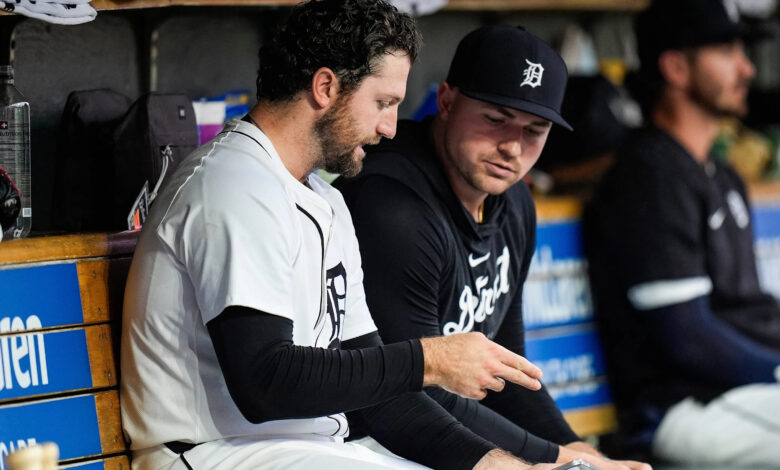
Tarik Skubal is a free agent after the season. He has won the Cy Young Award in the American League each of the last two seasons. The assumption is that the Tigers will not be able to afford to keep him. Detroit is 44-52 and in fourth place in the abysmal AL Central.
Since the AL is so bad, the Tigers aren’t completely out of it, and they have played good baseball in July. But they’re still not good, and Skubal, even as a two-month rental, could net them a fortune. While I’m not sure that adding a very tip-top of the rotation arm should be the Brewers’ highest priority, the simple fact is that there isn’t really another player on Skubal’s level that’s expected to move at this deadline (at any position), and there’s certainly no reason why you wouldn’t want to add a guy like Skubal if you were trying to win the World Series.
There are some questions about his health. Skubal missed a few weeks earlier this season to get loose bodies removed from his elbow, but he’s been solid in six starts since coming off the injured list and while his numbers aren’t as good as they have been the last two years, he’s still clearly one of the best pitchers in the league.
A challenge here is that it is assumed that the Dodgers will be in on Skubal. Their top four prospects are all outfielders, three of them are at the same level in the minor leagues, and all four are ranked No. 31 or higher in MLB Pipeline’s top 100. They don’t really need them all, and it would seem logical that they’d be willing to build a package around one of them for the right piece.
The Brewers likely can’t beat a Dodgers offer unless they include Jesús Made (not happening) or Luis Peña (whose trade value may have taken a dip given how much time he’s missed this season). Would the Brewers be willing to part with Peña (and probably at least one more of their top 10 prospects, probably two) for two months and a postseason with Skubal? It doesn’t seem like the type of move this front office would make, particularly since even with Skubal, the Brewers would still be heavy underdogs in a series against LA. Likelihood: 2/10.
Another top-line trade target who has been talked about frequently this season is Minnesota’s Joe Ryan. Ryan, unlike Skubal, is under control next season (he has a mutual option, but if it’s declined, he just goes back to arbitration). Ryan isn’t Skubal, but he’s a really good pitcher: over the past three seasons, he has a 3.33 ERA/3.39 FIP, he’s been mostly healthy, and he’s made two All-Star Games (including this season).
The thing is, though, the Twins are not remotely out of postseason position, even while they are under .500. They don’t look like a good team but they’re only three games back of the third Wild Card in the AL. Their owner also appears to want to compete and doesn’t seem happy with the sell-off his brother oversaw last year. My guess is convincing the Twins to trade Ryan would require a significant overpay for a player that already would’ve demanded a huge prospect package; I don’t think there would be much discernible difference between the cost for Ryan and the cost for Skubal. Plus, the Twins are surely less motivated to make a move than Detroit is even if that package is available. Likelihood: 1/10.
There is another Tigers pitcher who is having an excellent season who is an impending free agent: former No. 1 overall pick Casey Mize. It has taken Mize a while to become a good major league pitcher — after a promising rookie season in 2021, he missed most of the next two years when he needed Tommy John surgery. After two seasons as a roughly league-average starter after his return, Mize has found it in 2026 at age 29 to the tune of a 2.79 ERA and even more impressive 2.69 FIP in 14 starts.
From a financial perspective, Mize is quite cheap — his full season salary in 2026 is just $6.15 million — so that could be something that makes him attractive to the Brewers. He’s also got far less of a track record as a good player than either Skubal or Ryan, so while the prospect cost would be significant, it would surely be more palatable. Mize will be a popular target, should the Tigers sell, but he seems far more realistic to me than either of the two guys mentioned above. Likelihood: 4/10
Let’s talk about the next two in tandem. I don’t know if anyone has any idea what the Angels are going to do at this trade deadline; they’re working with interim general manager John Mozeliak, and while they are clearly bad, they also seem to think that “next year is our year,” so I’m skeptical they’ll trade anyone who isn’t a free agent after the season.
If they do entertain that possibility, though, there are two pitchers on their squad who are both 27 and both under control for two more years after this one who would both be intriguing pickups. The first is Reid Detmers, the No. 10 overall pick in 2020 and a former top 30 prospect. Detmers’ major league career thus far has been a roller coaster. As has become the Angels’ M.O., he probably debuted too early — he was barely 22 when he first arrived in the big leagues in 2021. He wasn’t bad in 2022 and 2023, but he wasn’t particularly good, either, and things went sideways in 2024 when he had a 6.70 ERA in 87 innings. Last season, Detmers pitched out of the bullpen, and while his surface-level stats weren’t great, there was some promising stuff under the hood.
That has continued this season. In a return to the rotation, Detmers has a 4.39 ERA — that’s slightly worse than league average — but his FIP is 3.36, and he’s got good peripherals with 10.2 K/9 and 2.9 BB/9. He’s also been quite durable, with 108 2/3 innings pitched as of the All-Star break.
The other interesting Angels pitcher was a big story in the season’s first month but has since cooled. José Soriano allowed just one run through his first six starts of the season — his ERA after six games and 37 2/3 innings was 0.24. Since then, Soriano hasn’t been all that good — he has a 5.15 ERA and 4.89 FIP in 73 1/3 innings across 14 starts since April 28. But I’ve long eyed Soriano as a potential Brewers target because he has certain traits that they value: he throws hard (96.8-mph average fastball velocity), gets ground balls (91st percentile), and has a lot of extension (78th percentile).
I imagine that because of these players’ relative youth, team control, and their high-ish profiles, the cost would be very high. There’s also the fact that no one knows what the Angels are going to do, and if I had to guess, I’d say that they’re going to make anyone who might help beyond this season more-or-less untouchable (even if it’s a dumb stance). Likelihood: 1/10.
What about Toronto’s Kevin Gausman? He’s in the last year of a five-year, $110 million deal signed before the 2022 season, and while he’s got a 4.33 ERA (105 ERA+), his peripherals are very much in line with what he’s done the last couple of seasons. Gausman isn’t as good as he was when he got Cy Young votes each year from 2021-23, but he’s still a solid pitcher who never gets hurt (at least 174 innings each year since 2020) and pitched very well for the Blue Jays in the postseason last year (a 2.93 ERA in 30 2/3 innings across six starts). It’s definitely an open question as to whether the defending American League champs would be willing to sell (they’re just 45-51 but only 2.5 games back in the Wild Card race), but if they do, Gausman is an obvious candidate. Likelihood: 4/10.
One last person that I’ll dedicate some actual time to is someone who is not having a good season, but who would surely get Brewers fans buzzing: Freddy Peralta. Things haven’t gone well for Peralta as a Met, though his peripherals aren’t all that far off what they were during his 2023-24 seasons in Milwaukee. The big concern here is that Peralta’s strikeouts have dipped — his 9.0 K/9 is the lowest of his career, and just the second time he’s ever been in single digits (9.9 in 2022).
The Mets should be willing to deal Peralta. He’s a free agent after the season, and given how poorly things have gone, you’d imagine they’re going to let him hit the open market rather than try to work out an extension before other teams get a crack at him. (They could also be curious to see if he bounces back after the All-Star break.) The optics of trading Peralta back to the Brewers — likely for quite a bit less than they gave up for him — would not be good for an already beleaguered front office. But if they can get something for him, they should. From the Brewers’ side, they may see a player they’re familiar with who they think they can get right, and even if they can’t, he would certainly fit the “innings eater” mold, as he’s been one of the more durable starters in the league over the last four seasons (and it’s not like he’s a disaster this season or anything). Likelihood: 3/10.
Finally, I’m going to zip through a few other potential but, in my opinion, extremely unlikely targets who fit the “ceiling-raiser” type.
San Francisco’s Logan Webb would surely command a king’s ransom if he were available; he’s been one of the best pitchers in the league for basically six years, he’s not 30 yet, and he’s got two more years of team control at an entirely reasonable $18 million a year. We haven’t really gotten any indication that San Francisco is interested in a multi-year rebuild, but if they do think they will go that way, they should absolutely dangle Webb, whose numbers are down a little but are still quite good.
I don’t see the Reds trading within the division really under any circumstances, but especially not when it’s a player who could help the Brewers beat them again next year. But if there were a world where Nick Lodolo was available to the Brewers, I’d be interested, even though his season has been inconsistent.
I suppose we should mention a third Tiger, Jack Flaherty, who is also a free agent after the season. He’s having an OK season, but he’s walking more batters than you’d like and he’s also been inconsistent over the last several years. The other thing with Flaherty is that he’s making a ton of money this season, $32 million, so the Brewers would probably want Detroit to pay some of that down.
Speaking of Detroit, Keider Montero and Troy Melton are both intriguing, but given that neither has even reached arbitration, I suspect the Tigers will hold them for the future, especially if any or all of Skubal, Mize, and Flaherty go. Somebody has to pitch. (Framber Valdez, another Tiger, makes too much money to be a Brewers target.)
There’s a lot of noise around Sonny Gray, who would probably be on the move if the Red Sox sell. Gray, though, has a full no-trade clause and there has been a lot of noise regarding Atlanta, so I don’t see a match with the Brewers.
Michael King is a solid pitcher and of all the starters on the Padres, he is by far the most desirable in a trade. The issue is money: King has player options in each of the next two seasons worth $25 million a year. Would the Brewers be willing to potentially take on $50 million in new money to acquire King?
A common name in trade discussions for over a year now has been Miami’s Sandy Alcantara, the 2022 NL Cy Young winner who is having a good bounce-back year after Tommy John in 2024 and a down season in his first year back. But the Marlins are too good to sell at this point, I think; the surprise team in the NL this year is right in the thick of it, and Alcantara is likely off the block.
There has been some talk that the Mariners would be willing to move one of their starters, as they essentially have six guys who would be in most teams’ top three. But the most likely candidate is the expensive and maybe-not-that-good-anymore Luis Castillo (he’s been a bit better over the last month but is still a net negative on the season), and the Mariners are definitely a team trying to win this season; their needs — a high-leverage reliever and a right-handed hitter — align too closely with the Brewers’ needs to make this a match that works.
The last one to mention in this section: All-Star Eduardo Rodríguez is having a very nice season for Arizona. But there’s a huge gap between his 2.25 ERA and his 4.00 FIP that gives me pause, and he’s not cheap either, with two more years at $20 million each. Rodríguez also has a limited no-trade clause, which he famously invoked when the Dodgers thought they were trading for him at the 2023 deadline. I don’t see this one as much of a possibility.
The Innings Eaters
Okay, so that was a whole bunch of starting pitchers who, were the Brewers to acquire any of them, would be expected to play a real role in a postseason starting rotation. But what if the Brewers aim lower? What if they’re just looking for someone to competently cover a bunch of innings between now and the end of the season so that players like Jacob Misiorowski and Kyle Harrison can get enough rest that they’re ready to go full speed in the postseason?
That invites a much larger player pool. These guys wouldn’t be the most exciting acquisitions, but they could certainly play a role. I’m not going to give likelihood ratings here, but I’ll comment on availability when I need to.
Looking back at Cincinnati, Brady Singer is an acquisition that didn’t really work out for them. His numbers this season aren’t very good, and he’ll be a free agent after the season. But what Singer can offer is durability: he has made at least 24 starters every year since 2021 and has thrown over 150 innings in each of the last four seasons. He’s not going to win you many games by himself, but if you’re just looking for a guy who can keep you in it, he’s not a bad choice.
One semi-intriguing option hasn’t pitched since May 15 but could be back by the time we reach the deadline, and that’s the Mets’ Clay Holmes. This is a move that might have a higher ceiling than just “innings eater,” as Holmes was an above-average starter last season and a good reliever for several years before that. But the Brewers would certainly want some guarantee of health before making the move. There’s also murkiness over next season: Holmes holds a $12 million player option for 2027.
Another Met, Sean Manaea, is making way too much money ($22 million this year and next) for a mediocre pitcher. He started the year in long relief, but he’s been solid since returning to the rotation in mid-June. If the Mets ate some of the contract, I could see it, but there’s no way the Brewers would do this if they had to pay the whole contract.
San Francisco has couple of veteran pitchers, Robbie Ray and Tyler Mahle, who are both free agents after the season. Mahle’s surface numbers are poor, but the peripherals are a bit better, and he’s been decent at times. Ray is the opposite: the 2021 AL Cy Young winner has good surface-level numbers, but the peripherals are bad. Either could work if expectations are low.
The Royals have a few pitchers who could conceivably be involved in something. Seth Lugo makes too much money to be any sort of realistic target. Michael Wacha has a $14 million club option next season and has been solid, if not spectacular, this season — he’d be one of the higher-end “innings eater” types, but he might be good enough to tempt a new manager to use him in the playoff rotation, which I’m not sure would be good.
Kris Bubic could’ve been an interesting target — he’s a free agent after the season and was an All-Star last year — but he just had a setback in rehab from a shoulder injury, and he probably won’t be ready by the deadline.
There are a few Baltimore pitchers who might be worth sniffing around. Trevor Rogers was excellent in 2025 but hasn’t been nearly as good this year; he’ll be a free agent after the season. Dean Kremer missed two-and-a-half months this year with a strained quad, and he’s only made four starts, but last year’s version was a perfectly fine back-of-rotation starter, and he’s got another year of control. Kyle Bradish has two more years of control, but while he’s healthy this season he’s had injury problems in the past. His value is also low right now, so Baltimore might want to hold him to see if they can get it back up.
Might a team try to buy low on Boston’s Brayan Bello? He’s had a horrible season and was sent back to the minor leagues for most of the last month until returning right before the break. He’s not cheap, with three years and an option remaining all at about $9 million on a big extension he signed prior to the 2024 season. It would be a risky project.
San Diego’s Walker Buehler obviously has some experience, but there’s not a lot to like, there. Also on the Padres, Griffin Canning has been a bit unlucky but walks too many batters. I wouldn’t be excited about Colorado’s Michael Lorenzen, but if all you’re looking for is innings, he could handle it.
Arizona’s Michael Soroka has pitched well this season when he’s been healthy, but he’s currently on the injured list with a glute issue. He should be back before the deadline and might be an interesting pickup. A bigger name on that same club but one who seems to be broken is Zac Gallen, who is a free agent after the season but is making a LOT of money this year. He’s just been getting demolished; not sure what happened to him.
Wrapping up
Kyle Harrison’s availability moving forward is likely to be the biggest influence on what the Brewers do at the trade deadline. If the Brewers think (or know) that Harrison is fine but just needs a little rest, then you might see them pick up an innings eater type who, if needed, could throw a few innings in the postseason — think about a version of Jose Quintana from 2025.
But if the Brewers are worried about Harrison — or Misiorowski, for that matter — making it to the end of the season at full effectiveness, they might — and maybe should — make a more aggressive move.
If they’re aggressive, the names that make the most sense to me are Casey Mize, Kevin Gausman, or — as wild as it might seem — Freddy Peralta. If they go the other route and look for someone to fill in toward the back of the rotation, I could see Tyler Mahle or Michael Lorenzen as options. If they’re looking to thread the needle and going for a pitcher who is more of a question but has a bit of upside, I wouldn’t be shocked by a move for Clay Holmes, Michael Soroka, or Trevor Rogers.
The Skubal move just doesn’t feel right to me right now. The aging Dodgers can’t keep this up forever, and while they’ll surely keep replenishing, the Brewers might think they’ll be a little closer in a year or two, at which point they’ll make an all-in move or two. I’m not saying it can’t happen, but this is a fairly deliberate front office who has put a lot of faith in building from within. Getting a player for such a short period of time who won’t even make them the league’s favorite just doesn’t feel like a Matt Arnold move.