Meet the first ever mother and son to play World Cup soccer: ‘I burst into tears’


Defender Tyler Bindon came on for midfielder Marko Stamenic as they tried to close out a pretty good 2-2 draw for the Kiwis. Pretty standard stuff, nothing to get too excited about.
But this was actually a moment of World Cup history. Why? Because Bindon’s introduction meant this was the first ever time that a mother and son had both played at a World Cup.
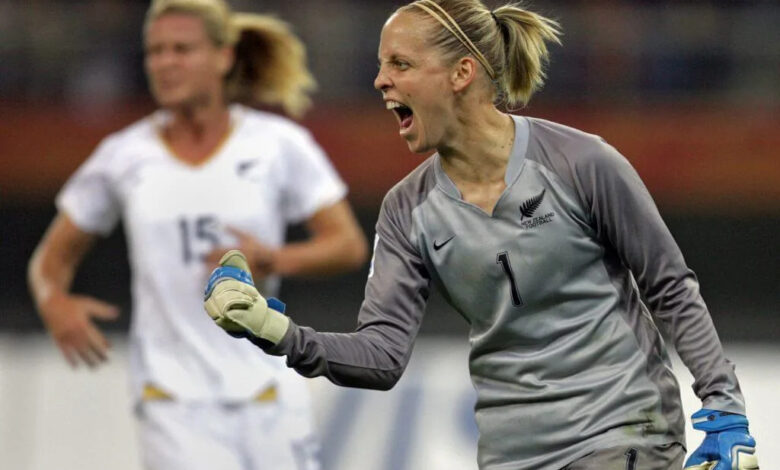
Goalkeeper Jenny Bindon was born and raised in Illinois, but met New Zealand volleyball player Grant Bindon at Lewis University, moved there after getting married and went on to play 77 times for the New Zealand national team. Three of those appearances came at the 2007 Women’s World Cup in China.
“It’s a funny one because [before this World Cup] I said to people, ‘I think this is happening,’” Jenny tells The Athletic. She tried to figure out if anyone else had done this. “I was trying to think ‘OK, who had kids when I was playing?’ But I couldn’t think of anyone, so I was like…this might actually be a thing. So [when we found out] it was really cool, and we’re pretty stoked.”
Tyler was born in Auckland in 2005. Unsurprisingly, because of his parents’ occupations, he grew up playing pretty much every sport possible. Jenny tried to tot them all up at one point, and while she thinks the final number is 17, there’s no guarantee she hasn’t forgotten one or two.
But football was always the one. When he was 12, Jenny got a job as a coach at UCLA, and he joined the LAFC youth system, where he stayed for the next six years. That’s why it was so fitting that he made his World Cup debut at the SoFi Stadium in Los Angeles. It also meant that so many of the people who played a role in his football development were able to be there: again, the exact number is slightly hazy, but Jenny thinks a grand total of 53 friends, family, old coaches and others were there to support him.
“Just seeing him on the pitch, with all those people in that beautiful stadium, you’re just like…‘What is happening?’ It’s a pinch me moment.”
Tyler was just under three when Jenny went to that World Cup, and he went with her. He was too young to consciously remember much from that, but it was an example of how he naturally absorbed football. He would be around when she was coaching future stars of the women’s game. So for him, this sort of thing is normal: in quite a literal sense, he grew up with not just football, but elite-level football.
“At three months old, he was at training, and he grew up listening to John Herdman [who was New Zealand Women coach during that World Cup]. He grew up playing with [Orlando Pride forward] Simone Jackson, and players like Ashley Sanchez and Hailie Mace. That was just normal for him. He just wants to play football with people that are good at playing football: he doesn’t care about race or gender or anything. If you can kick a ball, he’s there.”
It’s been quite a rise for Tyler. When work took Jenny and Grant to England in 2023, he came with them and tried to find a league club. It took about two months. By August, he had signed for Reading, at the time playing in the English third tier, initially for their Under-21s team. Pretty soon after, he had graduated to their senior side.
Then, in January 2025, he signed for Premier League side Nottingham Forest, initially returning to Reading on loan, before spending last season at Sheffield United in the Championship. He made his international debut in October 2023, played in their 2024 Olympics team and helped them qualify for this World Cup.
Like most things in his career so far, he appears to have taken playing in the World Cup in his stride: when The Athletic met Tyler in 2025, his even temperament was obvious, something backed up by pretty much anyone who knows him. “I think it’s his strength,” says Jenny. “He’s just one of those people that doesn’t get too high or doesn’t get too low, and he really self-manages.”
Jenny and Grant are trying as best they can to keep a bit of distance during this World Cup: plenty of the New Zealand players have their families staying with them, but while the Bindons and some of the extended Tyler appreciation society have travelled to Vancouver, where their next two games are, they are staying separately.
Did Jenny give him any specific advice, one World Cup player to another? “I think the only advice we gave him was just ‘Make sure you enjoy it, don’t let moments pass you by.’
“Grant and I watched Tyler walk out onto the pitch: yes, it’s the biggest event in the world, but it’s similar to parents watching their kids perform in the theatre. It’s just how you let them have their moment: you’re trying to not put any pressure on him, it’s his life, and we just want to be a part of it and just be there.
“I think as parents sometimes we live vicariously through our children, but it’s more of a case of how you have to walk next to them, and not in front, or behind.”
So what was more nerve-wracking for Jenny: playing at a World Cup herself, or watching Tyler play at one?
“That’s so easy to answer: it’s watching Tyler. I think when you’re a player you’re just immersed in what’s happening and you’re blocking the nerves out, because it’s your job to go out there and perform.
“I was just trying to slow down and take it all in, but just knowing like he was getting this opportunity was just unbelievable. I think I always had this heaviness — a good heaviness, but at any moment I was about ready to burst into tears. So when he did come on…I did burst into tears.”
This article originally appeared in The Athletic.
New Zealand, Women’s Soccer, FIFA Men’s World Cup, FIFA Women’s World Cup
2026 The Athletic Media Company