
Wrexham are an outlier in football’s bonkers financial ecosystem.
Missing out on a Championship playoff spot on the final day of 2024-25, their run of consecutive promotions in the English football league system is over. But commercially, they are still in full flight.
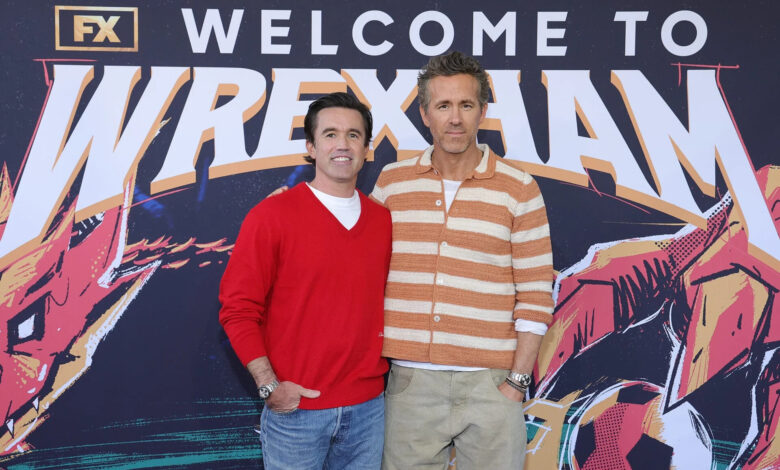
Ryan Reynolds and Rob Mac’s ownership of the club, in tandem with investment from the ultra-wealthy Allyn family and the near-$1trn private equity firm Apollo, has helped the provincial Welsh club access commercial markets that would be fantastical for their rivals in the second tier, where average annual losses total £15m thanks to the inflationary cycle inherent to the race to reach the Premier League.
Thanks to sponsorship deals with blue-chip brands like United Airlines, Meta and HP, Wrexham are able to simultaneously outspend practically all of their Championship peers in the wage and transfer markets, as well as plan long-term for the future with the ongoing expansion of the Racecourse Ground.
The club’s accounts for 2024-25, the most recent published financial year, showed wages just shy of £20m and amortisation (which is how clubs spread the costs of new signings over the duration of a player’s contract for accounting purposes) of £2.4m
But remember, that’s when Wrexham were competing in League One. After spending more than £30m on transfers last season, both of those metrics will have shot up.
Yes, capital from the owners has allowed the club to spend beyond its revenues. The Apollo investment alone saw nearly £48m land in Wrexham’s bank account. However, their losses are far more sustainable than most and, critically, revenue is rising faster than just about any club in UK football history.
Their ambition begets further commercial success, which begets further investment from sponsors, which begets even greater spending on players. And the owners value the club at £350m – that’s more than Newcastle United, one of the country’s very biggest clubs, were sold for just five years ago.
And while all eyes are focused on the World Cup in the United States, Canada and Mexico, Wrexham are rolling out their plans for another promotion tilt in 2026-27 and bolstering their commercial income, too.
“In 2024-25, Wrexham generated £25m in commercial income when the median in League One was £3m,” says University of Liverpool football finance expert Professor Kieran Maguire, speaking exclusively to HITC.

Ahead of next season, the men entrusted by Reynolds and Mac to grow sponsorship income, chief business officer Rob Faulkner and commercial director Tom Prosser, have inked a new shirt sleeve sponsorship deal with Nex, a California-headquartered business which styles itself as a ‘motion entertainment company transforming sedentary activity into active play.’
Okay, it’s not United Airlines or Meta, but the shirt sleeve sponsorship category is one of the most lucrative in a club’s arsenal. Industry sources have told HITC that the deal is likely worth seven figures. Should the club reach the Premier League promised land, that number will easily swell to eight-figures.
So, with £25m in commercial income in 2024-25, how much money from sponsorship and retail will the accounts register for 2025-26, 2026-27 and beyond?
“We shouldn’t view them as a Championship club or a potential Premier League club but rather as a streaming service club,” says Maguire, discussing the club’s commercial potential after news of the Nex deal broke.
“That is where the majority of their attention comes from. The relationship they have with the streaming services allows Wrexham to replicate, to a certain extent, what we see at Premier League level because streaming services are watched in hundreds of countries. The documentary series and the relationship with the owners means they can benefit. It’s a symbiotic relationship because the owners have benefited from the brand of the club.
“In the Championship that £25m figure should get to £30m. If they get to the Premier League then, as long as Reynolds and Rob Mac stay at the club, there is no reason they can’t hit £50m.
“That would put them in the best-of-the-rest category outside of the so called Big Six.”