The rule change professional golf simply must make after Scottie Scheffler controversy at The Open

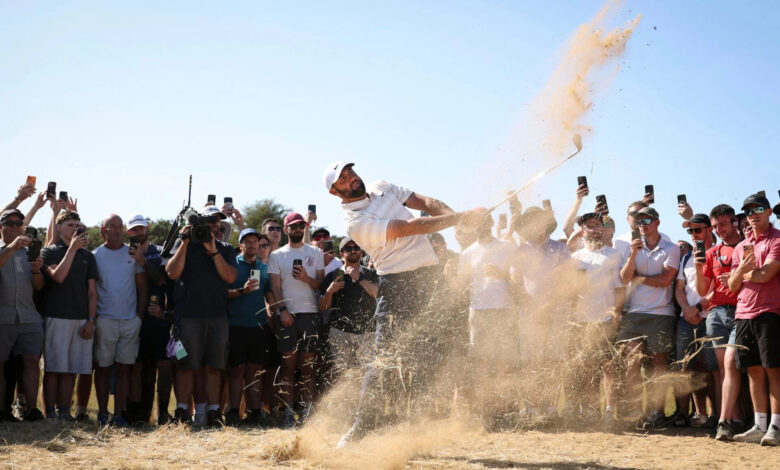

Scottie Scheffler recorded yet another top-five finish in a major last week at The Open Championship.
2026 has been a really strange season for Scheffler so far, with just one win to his name, a whole bunch of top-5 finishes, but no major victories.
He also missed his first cut in nearly four years in Scotland two weeks ago.
However, Scottie Scheffler bounced back really well last week at The Open Championship and his ball striking was supreme.
Had he putted even to an average standard he would have run away with the tournament.
Despite his poor putting, Scheffler still had a chance to tie the clubhouse lead at The Open on the 18th hole, but he ended up taking three shots to get down and finished in a tie for fourth.
It wasn’t to be for the 30-year-old at Royal Birkdale. However, he was involved in an incident during the final round on Sunday which arguably sparked more debate than his actual golf game throughout the week.
The rule change that must be made after Scottie Scheffler’s Open controversy
As the man from Dallas, Texas, was chasing down the clubhouse leader, he attempted a real Hail Mary type of shot on the par-five 17th hole.
He hit a three-wood from a terrible lie in the left rough, off a severe up-slope, and pulled his shot around 100 yards left of his intended target.

The world number one then hit a provisional ball and did exactly the same thing. However, he escaped scot-free after receiving a free drop from the grandstands and subsequently made a birdie which kept his hopes of winning the championship alive.
Scheffler explained the ruling he received at The Open on Sunday, highlighting how he didn’t actually have to find his ball once it was determined that it had, in fact, entered the grandstands.
“The rules official said it landed just barely left of the grandstand thing,“ Scheffler said.
“I don’t know what you call that, like a sponsor area or something. And Teddy had a beat right on where it was coming down.
“So when we get up there, it’s past the fence that marks the TIO, so he said anything that’s in there is part of the TIO.
“So then we said… we tried to figure it out. I said, if I find it, does that help me; can I drop it… since that would be about 50 yards closer to the hole.
“He said, yes, you can then use that spot, but you might have to go to the other side of the TIO, which I didn’t know exactly where that would be, and that’s not a great angle coming across there.
“So I decided to stop the search and go back and drop it doing point-of-entry TIO relief. Actually, I did that once this year during the Byron as well. Not something I’m proud of but I was familiar with.”
He was then asked: “So you didn’t actually have to find the ball?”
“No,” the world number one replied.
That is a rule that has to change as soon as possible.

How on earth can Scheffler hit one of the worst golf shots he has ever hit in his professional career and escape with a free drop and a direct line to the flag?
It just doesn’t seem right, nor is it a fair rule.
While Scheffler wasn’t intentionally aiming to hit his ball into the grandstands, he would have been fully aware that a miss to the left was preferable to missing to the right of the green.
‘Grandstanding’ continues to plague professional golf
There have been numerous incidents in professional golf where players intentionally aim to hit their balls into the grandstands.
Let’s say for example there is water short of the putting surface and a player is hitting his second shot into a par-five, with grandstands situated behind the green.
Sometimes, players will choose to purposely hit their balls long over the green, taking the water out of play in the process, and ensuring they get a free drop from a nice lie.
Perhaps a new rule needs to be brought in whereby you are forced to drop in an awful lie in the thick rough if your ball ends up in the grandstands, or a TIO (temporary immovable obstruction).
Professional golfers of today get away with far too much. Course designers and governing bodies are doing everything in their power to ensure that golf courses do not become obsolete due to the length that most of the best players in the world hit the ball nowadays.
However, by making one or two very simple changes, they could make the game instantly harder for everyone who plays at the very highest level.
Turning temporary immovable obstructions from an easy bail-out into something that the players actually want to avoid would be a real step forward for professional golf.
Scottie Scheffler didn’t break any rules on the 17th hole on Sunday at The Open. However, he shouldn’t even have had the chance to get his third shot on the green after his horrendous second shot.
Deep down, the world number one will undoubtedly agree with that sentiment, as will the vast majority of his fellow PGA Tour players.