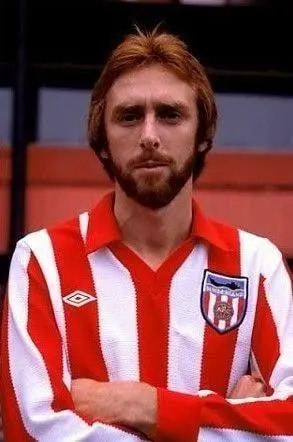

Bob Stokoe paid a near club-record fee for coveted winger Roy Greenwood. Less than 18 months later, Jimmy Adamson was ready to listen to offers, and all the signs suggested a deal could be done…
The Journal‘s John Donoghue shared the thoughts of Sunderland manager Jimmy Adamson on this day in 1977. Adamson said: “The good news is Roy Greenwood can continue playing football, just not for us.”
The club had been actively seeking a compensation payment for the pacey winger, whose knee injury had severely restricted his contribution.
Greenwood was determined to recover and had turned out regularly for the reserves, leaving the club unable to progress a claim.
Adamson confirmed that Greenwood could leave and that clubs were being circulated about the winger’s availability – at the right price.
With team captain Tony Towers already on the transfer list alongside Billy Hughes and Mick Henderson, there was a real sense that Adamson was clearing the decks to bring in his own players.
When Bob Stokoe completed the signing of Roy Greenwood in January 1976, the fee was £141,600 – close to Sunderland’s record transfer fee at the time. Greenwood was hot property, having scored 24 goals and registered countless assists in 118 appearances for Hull City.

Not long before signing for Sunderland, he had almost joined Manchester United. Manager Tommy Docherty had been very keen to reunite Greenwood with his former Hull team-mate, centre-forward Stuart Pearson, whom Docherty had signed from the Tigers in 1973 as he attempted to overhaul an ageing United side.
It has to be acknowledged that the Doc wasn’t a bad judge of a player. Aside from Pearson, he signed Lou Macari, Jim Holton, George Graham and Jimmy Greenhoff for competitive fees. He also brought in wingers Steve Coppell and Gordon Hill after Hull increased Greenwood’s asking price by £75,000 and Docherty decided to look elsewhere. Not a bad bit of business by anyone’s description. (Docherty would eventually get his man, but that comes later.)
I can remember being pretty chuffed about this signing at the time. I had been watching Greenwood skip past a number of our defenders since the 1972 – 73 season, and there wasn’t one game I saw him play against us where he didn’t do something to catch my eye.
I remember one match in particular at Boothferry Park in November 1973. Greenwood ran our defence ragged, had a hand in Stuart Pearson’s goal just before half-time and then John Hawley’s goal just before the end of the game. We were well beaten, and I was ready to start a JustGiving page (had such a facility existed back then) to help the club go out and buy this flame-haired youngster!
Greenwood came straight into our first team, who were heading for promotion to the top tier, playing 13 games and coming off the bench three times. He scored two goals and provided a number of assists from his left-wing berth.
It struck me when he arrived that he had a lot to live up to. Whilst not necessarily a like-for-like replacement, it was injured club legend Ian Porterfield who had, for the most part, occupied the left-hand side for Stokoe that season. Prior to that, you might have seen Dennis Tueart or Billy Hughes (who was still at the club) flying down that flank and, if you had been coming through the turnstiles a wee while longer, Geordie “Bullet” Mulhall would have been entertaining you.
I had seen and cheered these flyers and, with the confidence (or arrogance) of relative youth, was convinced we had another legend in the making.
I guess we all have players who stick in our heads a bit, not necessarily because they were a rip-roaring success with the Lads.
Roy Greenwood was, for me, a player who could have – and perhaps should have – made a big impact at Sunderland. He threatened to during the second half of the 1975 – 76 season. He had moments and games that made me think, “Wahey, here we go.”
Upon our return to the top tier in 1976 – 77, a combination of injury and loss of confidence saw him play just 14 league games (plus two substitute appearances). Stokoe had resigned and Adamson was now in charge. He was occasionally played as a central striker during this spell and scored one goal.

Just before Stokoe resigned, a deal had been agreed with Terry Neill at Arsenal. Neill had managed Greenwood at Hull and was very keen to take him to Highbury. Greenwood, though, refused to go. He was Yorkshire-born and perhaps didn’t fancy the bright lights of the big city.
If you had read The Journal‘s back page on this day in 1977, you would have thought Roy Greenwood would be gone by the start of the new season.
He did not leave. In fact, he went on a run of 15 games from October to late December, scoring four goals. Once again, he showed flashes of what he could do, but went into 1978 with another injury and did not trouble the first-team sheet again for the rest of the season.
Remarkably, he returned again in the early part of the 1978 – 79 season, starting three games and coming off the bench in five, scoring two goals. But, once again, injury and a loss of confidence saw him fade from the first-team picture.
In December, the club negotiated a potential transfer to Sheffield Wednesday, but Greenwood was allegedly unhappy with the wages on offer and refused the move.
Somewhat out of the blue, in January 1979 Tommy Docherty returned to get his man. Now Derby County manager, the Doc was reshaping his squad and swooped for a player he had long admired for a cut-price fee of £50,000. With his son Mick playing for Sunderland at the time, it’s hard not to think he would have picked his brain about Greenwood, who was now heading back to the First Division.
Having looked on his way out of the club in July 1977, he finally left in January 1979.
Roy Greenwood belongs to that group of players who looked a real handful playing against Sunderland, but when we signed them, for reasons not necessarily of their own making, it never quite worked out.
Which other players would you add to that list?