Legendary American goalkeeper offers fascinating insight on state of U.S. soccer

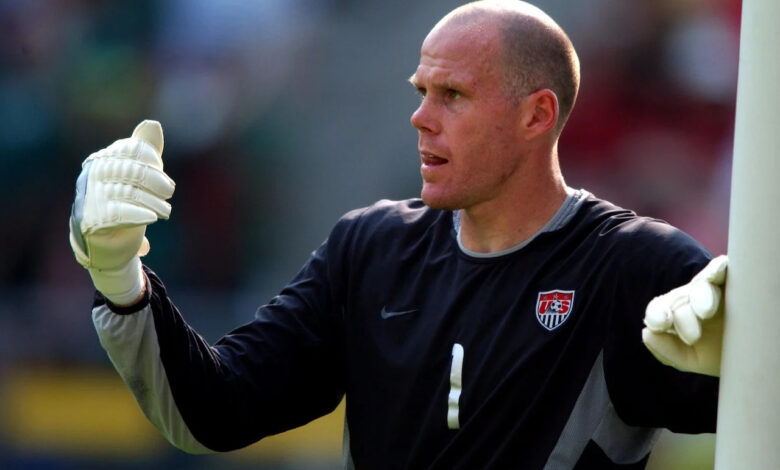

Legendary goalkeeper Brad Friedel was between the pipes for the United States’ deepest run in modern World Cup history, as the Americans advanced to the 2002 quarterfinal before falling to Germany.
In 2026, the USMNT didn’t make it quite that far. The Americans were eliminated by Belgium in the Round of 16, but Friedel still says it was a successful showing despite last week’s 4-1 loss.
The National Soccer Hall of Famer hopped on a Zoom call with MassLive to discuss the state of soccer in the United States, the team’s 2026 World Cup performance and where the Americans go from here. Friedel was speaking in association with Tonybet.
Friedel, who earned 82 caps as U.S. goalie, came into the tournament hoping the USMNT would finish first or second in its group. The Americans won Group D and then beat Bosnia and Herzegovina 2-0 in the Round of 32.
To Friedel, that’s a success. He believes external expectations have grown too quickly.
“We’re still in a good place. I think just because of the way social media is and the fans got on board, they want to sprint before they’re walking,” Friedel said. “They feel because we have 350 million people here, we should be better. But it’s not the culture of our country. And if you look at the highest populations of countries in the world, it’s only Brazil in the Top 10 that is a soccer nation. If it was just based on population then China and Pakistan and the countries like that would be killing it, and India. But they’re not because they’re also not soccer nations. The ’94 World Cup started our league and the infrastructure has grown. Look how far we’ve come in 30 years.”
Friedel, 55, believes the growth of Major League Soccer will be key to the sport gaining popularity in America. Though better known for his time as a star in the English Premier League, Friedel played for Columbus when MLS was in its infancy (1996-97) and coached the Revolution (2017-19) following his playing career.
The Ohio native thinks things are on the right track nationally — pointing to the 41 million American viewers for the Belgium match — and that United States soccer has come a long way.
“I put it into two buckets from ’94 till now,” Friedel explained. “Infrastructure back in ’94 on a scale of 1 to 10 was like a 0.5 or a 1. And now we’re like a 7, 8 or 9, depending on what state you go and what stadiums, but training grounds are brilliant, stadiums are brilliant, coaching is better, coaching education is better. The notoriety of the sport is better.
“Then the other pot is the development of players. People were talking about this being a golden generation. It’s not a golden generation. The same players today were the same like when I played in 2002. The reason — and by the way, it’s not a mistake of U.S. soccer or anything — the reason for that is we’re still not a soccer culture. We’re still not a soccer nation. Kids aren’t being — they’re not born and in the inner city all around the United States saying, ‘Hey, I want to be a soccer player when I grow up.’ They still want to be NFL, Major League Baseball, basketball.“
To change that, Friedel says Major League Soccer needs to continue its growth. MLS had record-setting attendance in 2024, averaging 23,234 fans per match, but that needs to translate to TV viewership, too.
“The next step is we have to get more viewers in the domestic league to get bigger media rights deals,” Friedel said. “So when kids are reading the stories, they’re reading about MLS players signing eight-year, $100 million deals, not just baseball players doing it. It’s another probably I don’t know, two or three generational turns, another 20 or 30 years, but we’re getting there and we’re growing.”
Friedel does see one major issue with Major League Soccer though: There’s no relegation. In many global leagues, the worst teams are sent down to a lower division due to underperformance.
He believes there’s a massive difference in European stakes because of the threat of relegation and sees that bleeding into the mindsets of American athletes from an early age.
“All over the world you have competitive games in soccer from the first kick of the ball in the season to the last,” Friedel said. “And you also have that in their youth chemistry, they know and they feel it when their team they support relegates and it’s like this built up, ‘We have to do well.’ And in America it’s really easy. So as you’re going through these huge developmental age situations, there’s never really pressure that, ‘I have to win’ or ‘I have to do well.’ It’s ‘I want to win and I’ll work hard to do it,’ but it’s completely different to wanting to do it and having to do it.
“So I think we need to figure out the next step to that. I don’t have the answers to it. I’m just telling you what I see from living abroad, playing abroad, and the differences between the U.S. and the rest of the world.”
Brad Friedel was speaking in association with Tonybet. Tonybet’s World Cup Card Collection campaign can see Canadian customers win up to $150,000 CAD.
More World Cup 2026 Coverage
- How much do England vs. Argentina World Cup Semifinal tickets cost? Here’s where to buy them
- Spain vs. France semifinal – Where to buy tickets to World Cup match in Dallas
- World Cup 2026: What to know for France-Spain, Argentina-England semifinals
- Want to keep following World Cup stars and US national team players? Here’s how
Read the original article on MassLive. Add MassLive as a Preferred Source by clicking here.