Lewis Hamilton expects Mercedes pair to get penalties for exceeding engine usage later in F1 season

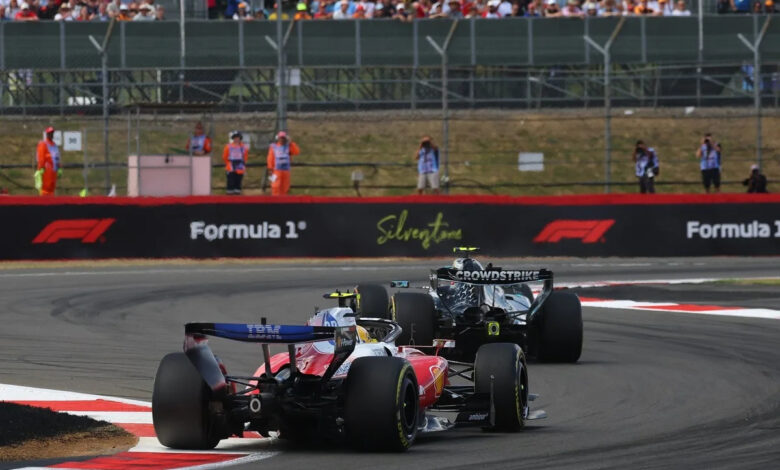

Lewis Hamilton expects Mercedes drivers George Russell and Kimi Antonelli to face grid penalties for exceeding power unit component usage later in the 2026 Formula 1 season.
The seven-time F1 world champion, who initially praised Ferrari’s reliability, put the spotlight on Mercedes given its reliability woes at the start of the season.
“Massively impressed,” Hamilton said about Ferrari’s reliability. “I think we came into the season knowing that we needed to level up in our processes and just how we executed on race weekends.
“That’s something that we were pushing for last year. And then the team’s really, every single individual brings so much to the table and is bringing the best to the table. The guys in the garage worked so hard for the pitstops. We’ve got great pitstops.
“And then everyone back in the factory has worked so hard to bring this consistency, and that’s really what I think ultimately is going to make the difference this year.”
Both Russell and Antonelli have suffered one electronics-triggered retirement each so far this season – Russell during the Canadian GP and Antonelli in the Barcelona GP – which Hamilton suspects might cause both drivers a problem later in the year.
“You’re seeing engines in general have had more issues this year than they normally would have, and don’t know what the situation with on the battery side of this for George and for Kimi, but at some point there must be a penalty, I would imagine, in the sense that we only have two battery cells or something like that,” Hamilton said.
“But it’s going to be key for us just holding onto this, maximising the points, executing to the best of our ability, even when it’s the case that we can’t win.”
Lewis Hamilton, Ferrari, George Russell, Mercedes

Mercedes used same number of electrical components as Ferrari
For the 2026 F1 season, each driver is permitted to use a maximum of four internal combustion engines (ICE), turbochargers (TC) and exhausts (EX) plus three motor generator unit-kinetic (MGU-K), energy stores (ES) and control electrics (CS) across the campaign.
Digging into Hamilton’s claim, the table below was the FIA’s report into power unit element usage going into the British GP, which shows Mercedes and Ferrari have used the same number of electrical components within their power unit element allocation so far this season.
|
|
ICE |
TC |
EX |
MGU-K |
ES |
CE |
|
Russell |
3 |
3 |
3 |
2 |
3 |
3 |
|
Antonelli |
3 |
3 |
3 |
1 |
3 |
3 |
|
Leclerc |
3 |
3 |
2 |
3 |
3 |
3 |
|
Hamilton |
3 |
3 |
2 |
3 |
3 |
3 |
However, what this table does not detail is how many of the previously used components are still in what teams call ‘the pool’, meaning they can be used again, or how many cannot be used again.
For example, it is not determined if the electrical components that failed on Russell’s car in Canada and on Antonelli’s car in Barcelona can be used again later in the year.
At the British GP, Lance Stroll picked up a grid penalty for exceeding the allowed number of power unit elements, as he took a fifth energy store and control electrics which resulted in a 10-place grid drop. But because the Aston Martin driver was due to line up 21st, he only lost one place and that was to team-mate Fernando Alonso.
Grid penalties for exceeding power unit usage was a theme of the early years of the V6 Hybrid era, as well as Honda’s previous troubled start to the F1 regulations when it joined the grid with McLaren in 2015, but so far it hasn’t been a hot topic given teams’ ability to rotate between existing parts.
However, if the pools begin to run dry for teams, then needing to use extra power unit elements and take on penalties would naturally become a bigger topic once again.
Read Also:
Mercedes reveals conclusions after costly DNFs in recent F1 races

To read more Motorsport.com articles visit our website.