The pathway to success: How domestic growth holds the key to the future of Indian women's cricket


The pathway to success: How domestic growth holds the key to the future of Indian women’s cricket originally appeared on Cricket News.
Add Cricket News as a Preferred Source by clicking here.
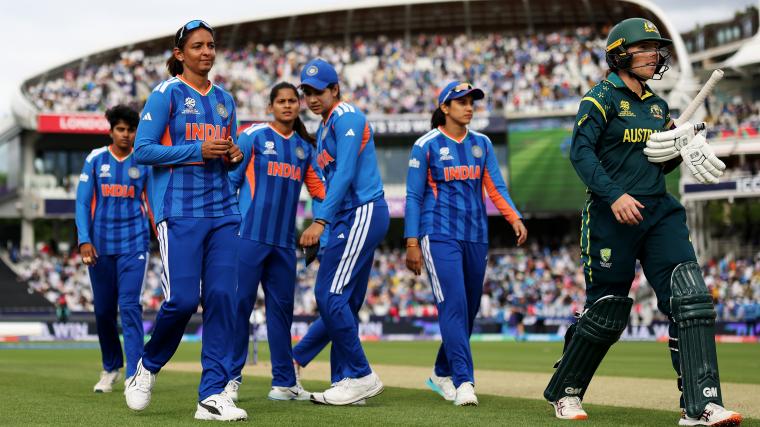
In the wake of India’s exit from the Women’s T20 World Cup, questions have been asked about everything from the playing XI to the captaincy and team structure. But according to The Cricket News’ Arya Shah, the reasons for their under-performance go much deeper into the heart of the Indian game.
India’s exit from the ICC Women’s T20 World Cup has understandably been disappointing for the whole country.
In the fallout from their failure to make it beyond the group stage of the tournament in England there has naturally been a lot of dialogue, and questions raised about the team’s playing XI, as well as the structure and captaincy.
Fans have been left trying to fill the gaps and find answers for the team’s underperformance and subsequent exit.
But while all those topics will be important in the fullness of time as part of a proper post-tournament debrief, what answers the question of why India failed best is perhaps a bit of a comparative analysis between India’s national women’s game and that of Australia.
A deeper dive into that perhaps identifies the root cause of the team’s loss, and showcases that this isn’t a one-off that can be traced back to faults within a single match. Instead, the issues go way back to before all these World Cups and major tournaments, and to the pathways that produce the country’s international players.
T20 WWC HUB: T20 WWC Final 2026 – Key Details | How Australia built a legacy, not just a team
Australia set the example in women’s cricket
When Team Australia steps onto the field, it isn’t just the most talented playing XI from their country; it’s the end product of a system that has been created, refined and curated over decades.
Their domestic Women’s National Cricket League has existed since 1996, providing almost three decades of elite state cricket for these women to train.
Each season of the league, the best women’s domestic cricketers in Australia continue to compete in a high-pressure, high-quality, structured environment where they learn to perform and prepare for their potential future within international cricket.

ICC Media
The Women’s Big Bash League has existed since 2015, strengthening the pathway further, as these players now compete with international players, learning various styles of cricket that may not have been as prevalent in their country, and playing in front of a larger audience, before they don the Australian jersey.
This structure means that, by the time Australian players make their international debut, they are already heavily prepared to take on the game. They’ve already played in conditions that simulate international cricket. And that is the game-changer.
India women’s cricket: A lesson in infrastructure
Switching to India, their journey and pathway is slightly different. The key point is that India does NOT lack talent. It is also that the country does NOT lack a structure — for years, India has been producing exceptional cricketers such as the likes of Mithali Raj, Harmanpreet Kaur, Smriti Mandhana, Deepti Sharma, Richa Ghosh, and many, many more.
With tournaments such as the Senior Women’s One Day League and the Senior Women’s T20 Leagues, state teams such as Maharashtra, Karnataka, as well as Railways have developed and strengthened players that have gone on to represent India internationally, and have done it immaculately well too.
So where does the issue lie? It isn’t in the domestic structure. It is the ecosystem it is surrounded by. When compared to Australia, India’s domestic competitions tend to lack visibility (How many of you knew about the Senior Women’s League? Do you know where, or if, they are broadcasted on television at all?).
They also have much lower financial investments, and have fewer chances for international exposure on a country-wide scale.
LIVE: Latest WWC Live Coverage
For years, this meant that a generation of Indian cricketers would enter the international stage without experiencing the high-pressure match setups that their Australian counterparts had already explored, unless they were one of the lucky few to play foreign tournaments and leagues, or county games.
Now of course, it is undeniably true that the WPL has begun to change that. Since its debut in 2023, it has grown rapidly and has transformed women’s Cricket in India. Just as with the WBBL, young players in the WPL now find themselves playing with, and against, some of the biggest international talents in the world.

They now experience the high-intensity environments, jam-packed stadiums, broadcasting setups and viewership that franchise cricket can provide.
This is instrumental in honing the development of these players, in a way that domestic cricket alone is unable to do. However, we cannot expect the WPL to bridge a gap created over 30 years. This isn’t a system that can be built and perfected overnight.
The way Australia dominates women’s cricket (13 World Cups prior to 2026 and counting) has nothing to do with one “Golden Generation” or playing XI. Rather, it is a testament to their rock-solid ecosystem that has created pathways and a structure that produces players that are ready to compete internationally.
MORE:Check out all the latest women’s cricket from The Cricket News
India must future-proof women’s cricket
On the positive side, this is where India has plenty of opportunity to grow. Their players have already showcased that India possesses world-class talent that can take on giants such as Australia as well (as we saw in the ODI World Cup).
The new challenge is to make sure that the upcoming generations are better prepared from the start, rather than them learning as they play.
And that means India must continue to strengthen grassroots cricket, invest more in coaching and improve the scale, visibility and pressure surrounding domestic tournaments.
A key part will be expanding so that the WPL is just part of their developmental ecosystem, not the majority.
If India continues to invest in these seemingly “unseen” foundations, their exit from the 2026 World Cup may just become the start of a much larger story of sustained women’s cricketing success for the country — not just as an unfortunate end to an incredibly promising campaign.
To hear Arya Shah’s regular thoughts and to share your voice on the biggest cricketing topics, visit and follow The Cricket News’ Facebook, Instagram, and X (Twitter) pages.