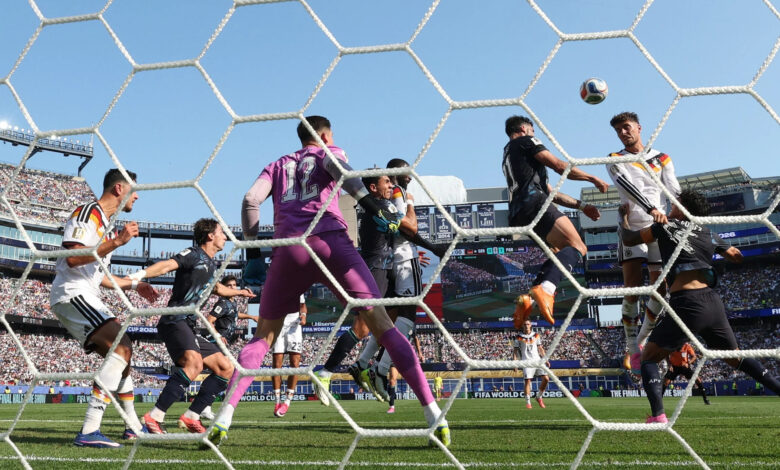
In the group stage of the World Cup, games can end in ties.
But what happens when play advances to the knockout round?
Elimination games obviously can’t end in ties, so play advances to extra time (which is more known as overtime in typical American sports). The 2022 World Cup final was decided in unforgettable fashion when Argentina defeated France in penalty kicks after a back-and-forth extra time.
Here’s how extra time rules work in the World Cup.
World Cup extra time rules
If a game is tied after 90 minutes, plus stoppage time, 30 minutes of extra time is added.
That 30 minutes of extra time added is split into two 15-minute halves. The entire extra time will be played, so the period is not sudden death or golden goal. If the game is still tied, next up is penalty kicks.
World Cup penalty kick rules
If the teams still cannot separate themselves after additional half hour, the match will be decided by penalty kicks. Each team will select five shooters. The side with the most goals after five rounds wins.
Should the teams remain tied after five rounds, additional rounds will be added until one team cores and the other doesn’t.
Only players who are on the field at the conclusion of extra time are eligible to take penalties. If the shootout goes beyond 11 rounds, then the order restarts.
Is World Cup extra time sudden death or golden goal?
No, World Cup extra times will be played for the entirety of the 30 minutes of extra time. Even if a team scores in the first minute of extra time, the game is not over and the other team can equalize the score.
This article originally appeared on The Patriot Ledger: World Cup extra time rules explained. Is there golden goal?