UFC Freedom 250: 5 big takeaways from UFC's wild White House takeover, Justin Gaethje's stunning upset

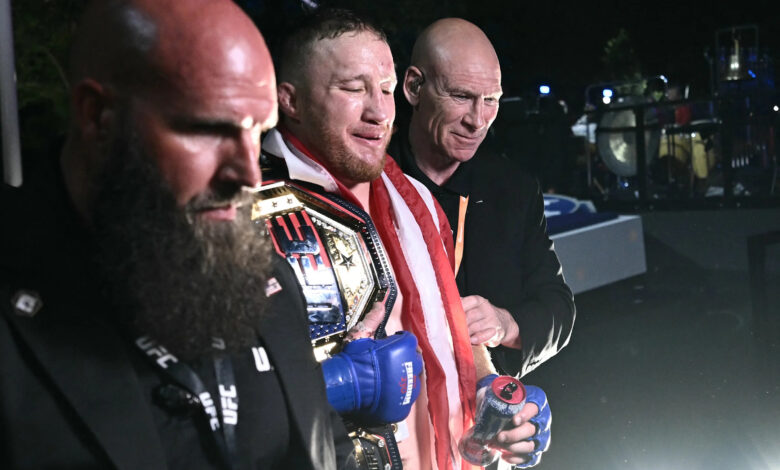
UFC Freedom 250 was an MMA event to remember in several different ways, with plenty of scenes we never thought we’d see. Here are the top takeaways from a wild evening on the White House lawn.
1. The math told us that Justin Gaethje was headed into an execution. At his age? And with the damage he’s taken? There was just no way he could beat Ilia Topuria, a faster, sharper striker at the height of his powers. But the thing about Gaethje is and has always been that he has some attributes that don’t show up when you’re crunching the numbers and calculating the outcomes on paper. You might call it guts. Or what some of the old-timers used to refer to as “brawlability.” He’s tough and he’s stubborn and he wings punches like a man with nothing to lose. That’s not always enough, but some nights it is.
This was one of those magical nights for Gaethje. After barely surviving the second round he came out in the third and punched his way right back into this fight. Then all he had to do was pummel Topuria until both his eyes closed and his face took on entirely new shapes, which just so happens to be the thing Gaethje is most suited for. And so now, at 37, Gaethje is the sole owner of the UFC lightweight title, a belt whose one true form seemed determined to elude him. The numbers might have said it would never happen, but math sometimes has a hard time finding its way into a cage fight.
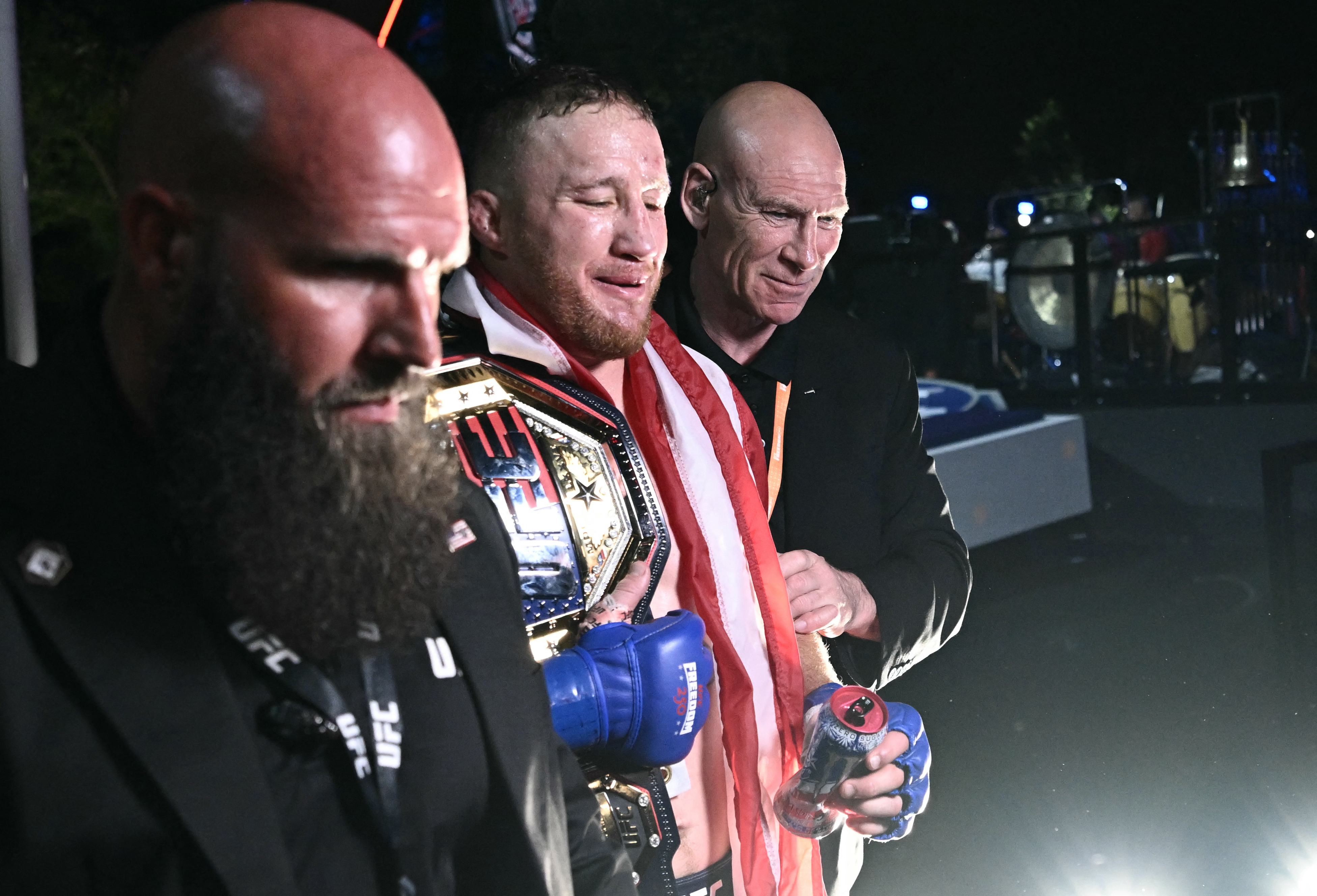
2. Topuria is probably going to wake up with some regrets on Monday morning. For instance, he might second-guess his decision to grapple with Gaethje when he had him hurt in Round 2, rather than just pouring on the punches. He might also wonder if it was really such a good idea to walk right into the teeth of Gaethje’s offense so early and and so often, giving the bigger brawler every opportunity to hit him.
Was it arrogance? Did he simply not respect Gaethje’s abilities? Did he overestimate his own? At times it looked like Topuria was actively trying to fight in such a way that would give Gaethje the best possible opportunity to beat him. He paid for it, too. He lost his title and took the kind of damage that sometimes changes a fighter forever. There’s no questioning his toughness after that fight, but there will be some questions about the strategy. And now it’s going to be a while before he’s in any condition to get in there again and provide some fresh answers.
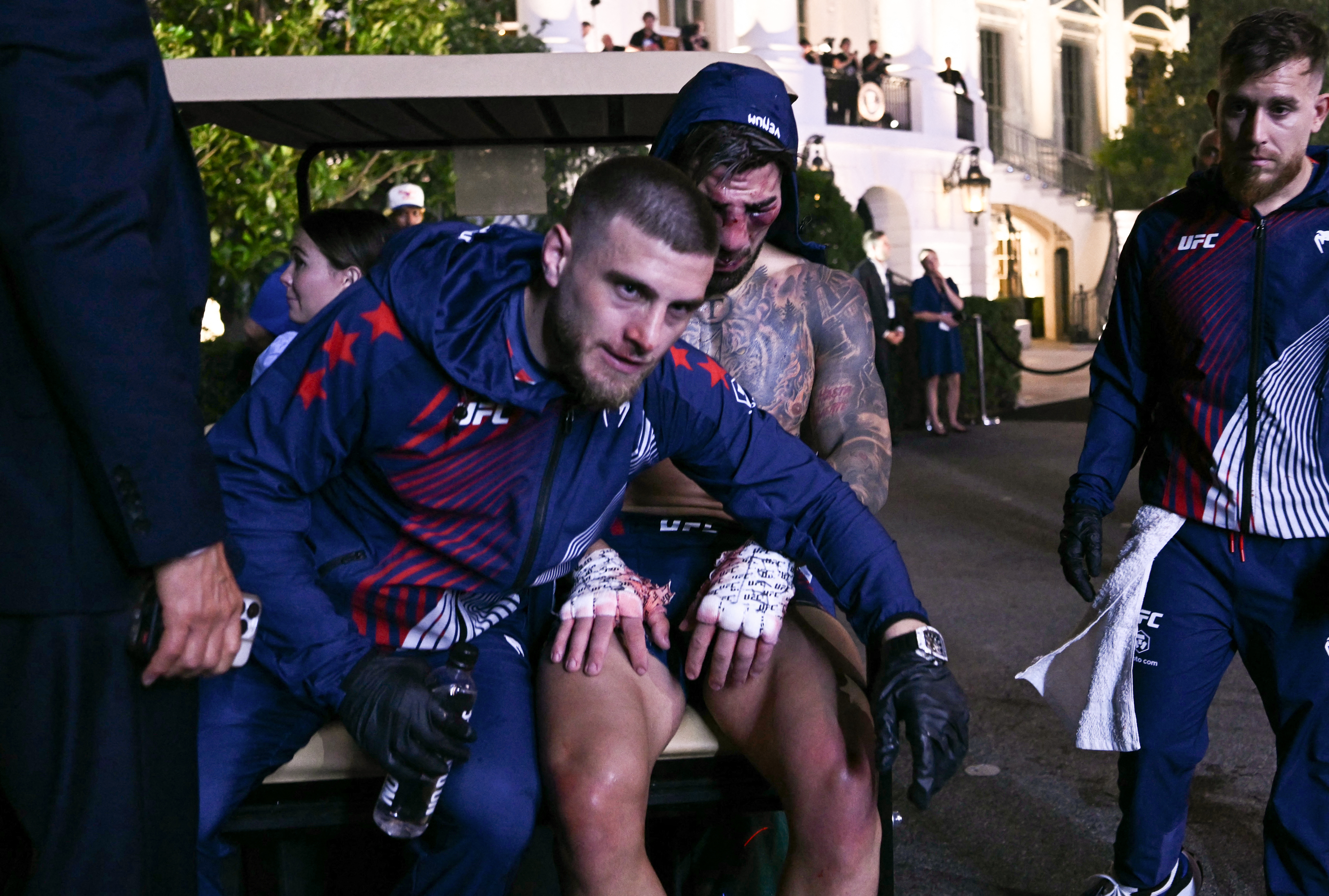
3. Stop me if you’ve heard this one: Ciryl Gane is the interim UFC heavyweight champ. Again. The man who’s fought for some version of the title in five of his last eight fights just won’t go away. He keeps hanging around and, at the most inconvenient times, reminding us that he’s actually a really good heavyweight — at least when he gets to do his stuff.
Alex Pereira was, in that sense, a pretty ideal opponent for Gane. He came plodding forward to station himself right there at the end of Gane’s jab. He remained slightly too slow and entirely too hittable, which played right into Gane’s strengths. After he’d finally walloped Pereira enough to warrant a stoppage, Gane went and laid down in the center of the cage with a look on his face that suggested he wasn’t even sure he believed it was real yet. Another interim belt. And likely another chance to unify the title in his future. Another go at righting what has gone wrong in the biggest fights of his career. Maybe this time he’ll remember to keep his fingers tucked away.
4. For a night that ended with a major upset, this was an event that really played out according to chalk. With the notable exception of the main event, all the big favorites won. The sacrificial lambs all marched off dutifully to the slaughter. Sean O’Malley got his spotlight moment. Josh Hokit got his always regrettable mic time. Bo Nickal got to get back on the blue chip prospect path. Mauricio Ruffy made the most of a showcase designed to make him look good.
The fighters on the other end of all those beatings all had one thing in common, and it’s that none are anything you could call young, at least for a pro fighter. Aiemann Zahabi, at 38, is the youngest of the bunch. Derrick Lewis and Michael Chandler have both crested the hill into their forties, and they both looked it too.
Chandler fought almost one full round before being stopped and was credited with landing just three strikes and attempting only 12. I’m not sure where he thinks things are headed from here, but the fact that the UFC put him in that fight to begin with ought to tell him it might not be anywhere he wants to go.
5. If you’re expecting “Super Bowl numbers” in terms of viewership for this event, as UFC CEO Dana White promised, you’re probably in for a disappointment. A delayed start meant an event that didn’t really even get going until around 9 p.m. ET on a Sunday night, then stretched into the early morning hours to test the resolve of anyone who has to get up for work in the morning. It was also restricted to Paramount+, which made it all the more ironic when the event was occasionally described as a “gift” to the American people. (Most gifts don’t cost the recipient money in the form of a streaming service subscription.)
And yet, the actual execution of the event reminded us that the UFC production crew can pull off minor miracles when given a chance. The presentation was genuinely visually stunning at times, and the U.S. Marine Band somehow emerged as the most surprising star of this show.
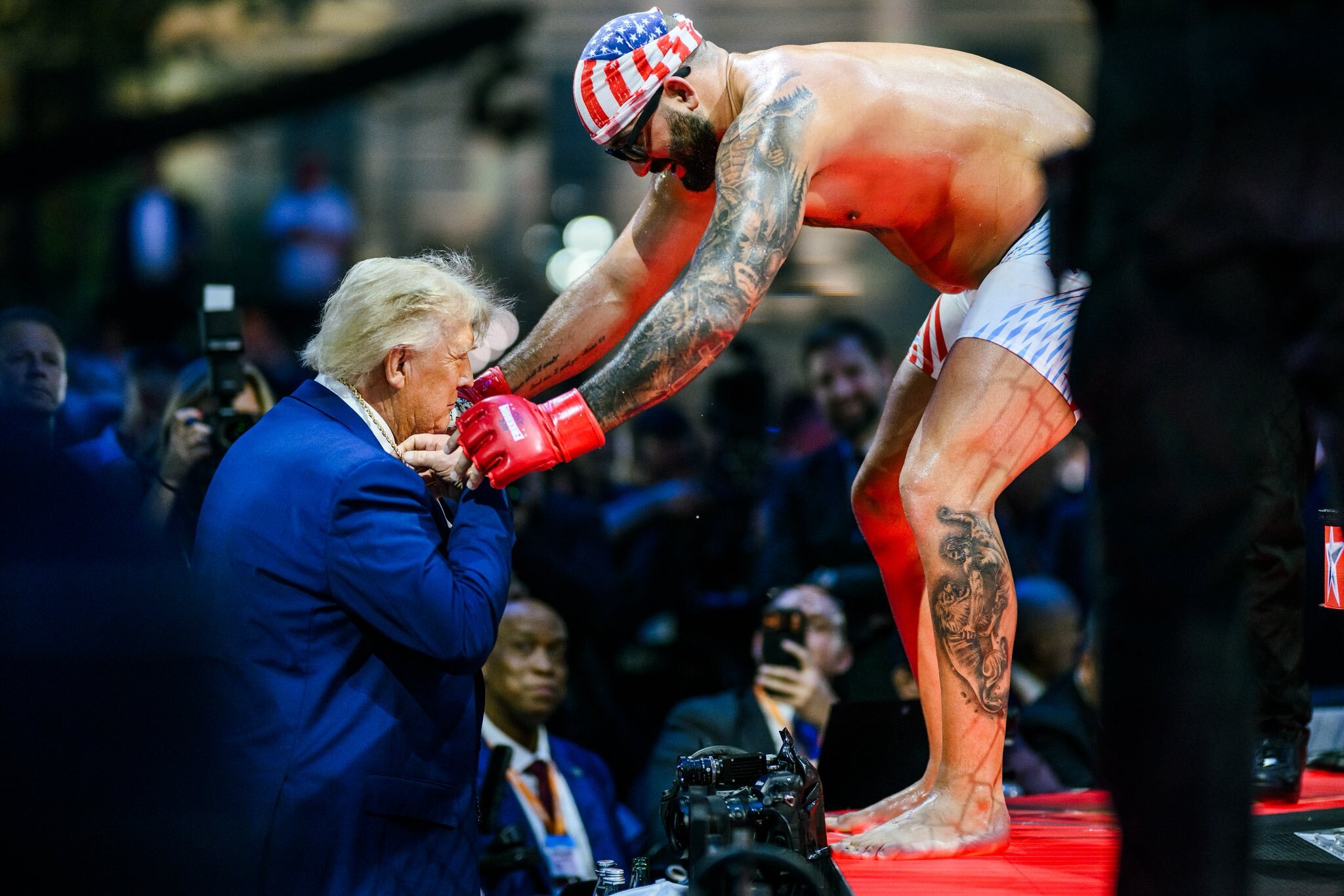
Setting up a fighting cage on the White House grounds is always going to be the kind of thing that forces people to have some kind of opinion, but in terms of propaganda and politics this definitely felt less obnoxious than it could have been. If anything, the pro-Trump agenda the UFC has embraced felt almost toned down compared to past events. Aside from a lengthy entrance that saw a grimacing Trump walk out alongside the UFC CEO White, the U.S. President mostly disappeared into the background, making it easier to focus on the fights.
I’m not sure the UFC accomplished its goal of “telling the story of America” using a series of AI vignettes. (LOL at Lewis and Clark walking robotically into a stream with Sacagawea while never looking up from a map.) And for an event where the UFC bragged about its willingness to lose money for the sake of making history, this broadcast sure worked hard to sell everything from Dodge trucks to military contractors to Trump’s own social media platform.
But honestly — and here’s where my own lowered expectations come into play — this could have been a lot weirder. By the time Gaethje and Topuria started slugging it out, it almost felt possible to ignore the trappings of the event and just enjoy the show. That’s not me saying they should make “the claw” a permanent part of the Washington D.C. skyline, but maybe it is me admitting that sometimes the drama of this sport is powerful enough to briefly distract us from, well, everything else surrounding it.