For the second year in a row, the Canadian Open began Saturday without three of the biggest names in men’s tennis.
World No. 1 Jannik Sinner, 24-time Grand Slam champion Novak Djokovic, and seven-time major winner Carlos Alcaraz will all miss the tournament. Sinner and Djokovic withdrew in late July, while Alcaraz is recovering from a right wrist injury but is expected to return for the U.S. Open later this month.
Organizers hoped this year’s later start would help keep the top players in the field. The 2025 tournament began just two weeks after the Wimbledon final, while this year’s event gave players an additional week to recover.
“We are obviously very disappointed that Jannik and Novak won’t be joining us in Montréal this year, especially after they also withdrew from last year’s tournament in Toronto,” said tournament director Valérie Tétreault.
While Tétreault acknowledged the demands of the calendar and the need for players to prioritize their health, she said repeated withdrawals point to a larger problem. “Masters 1000 events are among the flagship tournaments on the tour, and fans rightfully expect to see the world’s best compete,” she said.
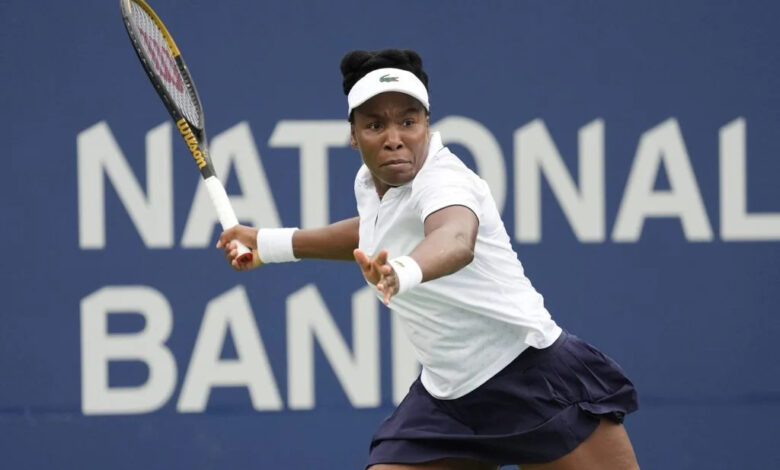
The women’s draw, which is played at the same time in Toronto, has also lost several notable players, though most of those absences were injury-related. Defending champion Victoria Mboko will miss the tournament as she continues to recover from a knee injury that has had her sidelined since June. Karolína Muchová, Emma Raducanu, and Hailey Baptiste are also out.
Star player absences raise questions about the value of ATP Masters 1000 and WTA 1000 tournaments, even as they remain the highest regular-tour categories below the Grand Slams. Singles champions will receive 1,000 ranking points, compared with 500 or 250 points at lower-tier tour events.
At this year’s tournament, the men’s singles champion will take home $1,151,420 in prize money while the women’s singles champion will receive $1,085,220.

Sinner’s withdrawal is particularly notable. By skipping Montreal, he gave up the chance to become the first player to win every Masters 1000 tournament in a calendar year.
The 24-year-old won the first five events of the season at Indian Wells, Miami, Monte Carlo, Madrid, and Rome. But after winning Wimbledon in July, he chose more rest time over pursuing the record.
“After carefully considering all the factors together with my team, we have made the difficult decision to withdraw from Montreal,” Sinner said. “It is never easy to miss such an important event, but we believe this is the right decision to prioritize my health.”
Djokovic has also become more selective with his schedule as he looks to take home a 25th Grand Slam title in New York. He is expected to return at the Cincinnati Open, the final Masters 1000 event before the U.S. Open.
Renewed Scrutiny of Masters Tournaments
The withdrawals have renewed criticism of the ATP’s decision to expand most Masters 1000 tournaments into nearly two-week events. The longer formats give tournaments more days to sell tickets and programming, but they also require players to spend more time on the road.
Alexander Zverev, the top-seed in Montreal, said the expanded events have led him to enter fewer smaller tournaments.
“I think it’s just too long for some players, too much before the U.S. Open,” Zverev said on Sunday. “I also used to play more tournaments. I used to play more 500 events, 250 events when the Masters were shorter, but now I don’t do that anymore just because of time spent away and time spent on tournaments.”
While he considered skipping the tournament as well, Zverev ultimately decided he needed the competition. “I think you want to be competing against the best, especially before the U.S. Open,” he said.
The post Star Withdrawals Test the Value of Tennis’s Masters Events appeared first on Front Office Sports.