Lando Norris Hits Back at F1 Bosses: “It’s a Shame” Drivers Were Sold Out for New Brands

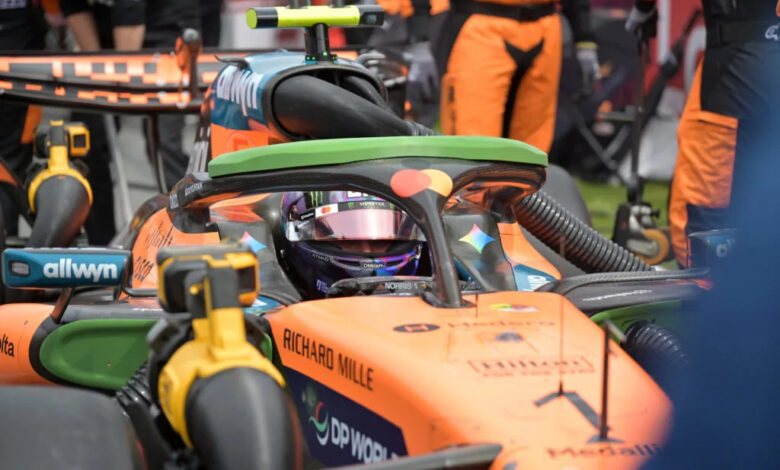
Formula 1 is currently enjoying a financial and cultural golden age. Stadiums are packed, team valuations have skyrocketed into the billions, and the grid has expanded to attract some of the biggest automotive manufacturers in the world.
But according to the defending world champion, this unprecedented commercial success is coming at a steep cost to the sport itself.
In a scathing new critique of Formula 1’s leadership, McLaren’s Lando Norris has publicly accused the sport of putting its bottom line ahead of pure racing, arguing that the controversial 2026 engine regulations are proof that financial imperatives now outweigh driver satisfaction.
F1’s 2026 Engine Controversy
To understand Norris’s frustration, you have to look at the mechanics of the 2026 regulation overhaul. The current generation of F1 cars features a highly debated 50-50 power split between the internal combustion engine (ICE) and the electrical battery system.
This drastic shift toward electrification was not implemented to make the cars inherently faster or better to drive. Rather, it was a calculated business move by F1 and the FIA to court major road-car manufacturers. The strategy worked, successfully luring Audi, Honda, and Cadillac onto the grid for this regulation cycle.

However, the cost of that corporate victory has been passed directly to the drivers, who now have to heavily manage their battery deployment rather than pushing their limits. At power-hungry tracks like Silverstone and Spa-Francorchamps, drivers are routinely forced into awkward “lift and coast” maneuvers on the long straights just to regenerate electrical energy.
Speaking to The Guardian ahead of the Hungarian Grand Prix, Norris made it clear that this compromise was a betrayal of the sport’s purist roots.
“The thing that’s a shame is that Formula One’s gone too heavily led by the fact it’s a business nowadays and not how can you make the sport the best possible,” Norris stated. “It’s how can you just make the most money as a business, and that’s just not what it should simply be. That’s not how a sport should be run.”
Ignored Voices in the Paddock
Norris is far from the only high-profile critic. Four-time world champion Max Verstappen has previously likened the new battery-management driving style to “Mario Kart,” while veteran Sky Sports F1 pundit Martin Brundle admitted the regulations left him with a “tear in his eye” because the great, sweeping high-speed corners of traditional circuits have been fundamentally compromised.
Despite these unified complaints from the paddock’s heaviest hitters, Norris claims the drivers’ feedback is ultimately powerless against the sport’s financial ambitions.
“Everyone wants to make money, so in order for Audi and other teams to come in we had to change these things,” Norris explained to the outlet. “It’s a shame, it should never have been like that. But that’s how businesses work.”
He continued: “The biggest voice should always be ours as drivers, and that’s not because we’re selfish in saying that but because we have the best idea of how racing should be… We have very, very little say, and a lot more of it’s done because if you can have Audi and other teams in it, it’s a bigger win than the drivers being happy.”

While the traditionalists in the paddock might agree with Norris, the executive reality paints a very different picture.
Since Liberty Media took over the sport, Formula 1 has leaned heavily into a new global demographic. Driven largely by the massive success of Netflix’s Drive to Survive, F1’s audience is younger and more diverse than ever before, with recent data indicating that 42% of the global fanbase is now female.
F1 CEO Stefano Domenicali has openly pushed back against the drivers’ criticisms, arguing that this massive influx of new fans simply does not care about the technical nuances of electrical clipping or throttle angles. In the eyes of the executives, as long as drivers are aggressively battling side-by-side into Turn 1, the commercial product is working perfectly.
Formula 1 is undeniably a better business today than it was a decade ago. But for drivers like Lando Norris, who grew up dreaming of pushing the fastest machines on earth to their absolute limit, the sport they love is slowly being buried under corporate spreadsheets.