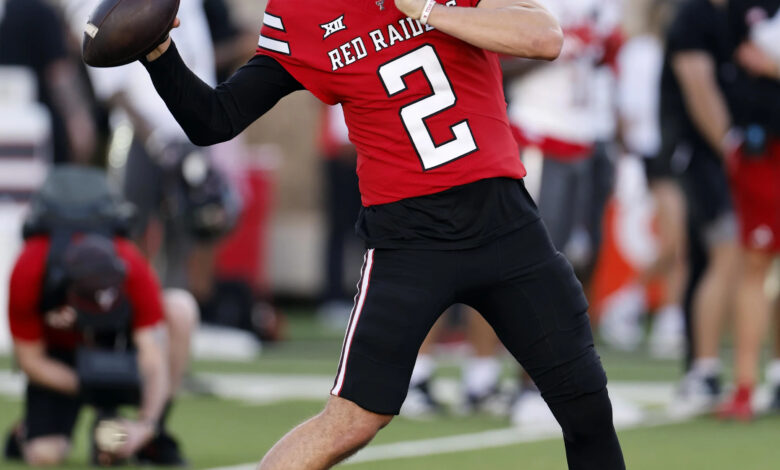

The NCAA and college football dodged a bullet earlier this week when Texas Tech’s Brendan Sorsby chose to move on from the Red Raiders and enter the NFL’s supplemental draft. (A lawsuit filed by the Big 12 early Monday may have had something to do with that.)
So we will not, in fact, have to endure the surreal circumstances of a guy who admittedly gambled on both the sport he plays and the team he plays for suiting up despite this. Both the NCAA and college sports show the weakness of their awkward position between professional and amateur sports all the time, but never has it been more apparent than in this particular situation.
Once again, and as has become standard, a player went to court to fight a ruling that he didn’t like, and he found a sympathetic judge to, at least temporarily, overrule the NCAA. This sort of thing is tolerable if increasingly tedious when it comes to matters of more standard issues of eligibility, but when the issue is eligibility for an admitted sports gambler, it brings home how comical and untenable the college football’s organizational foundation really is.
I don’t know what there is to be done about a sideshow cast of judges creating legal precedent in college sports willy-nilly, and it could be there isn’t anything that can be done from an NCAA governance perspective as the system stands now. Which is the problem. We were spared from an embarrassing decision this time around, but no doubt there is some judge in southeast Nebraska with a degree from Hollywood Upstairs Law School poised to tough off the next crisis. It’d be a good idea to head that guy off.