Why 'quitting on the stool' still carries an enduring stigma — even if not all mid-fight surrenders are the same

He held titles in four different weight classes, won more than 100 professional bouts, and spent more than 30 years of his life in the boxing ring. But to this day, one of the things Roberto Duran is best known for is the night he declared he’d had enough during a 1980 title fight with “Sugar” Ray Leonard.
People called it the “no más” fight, even though Duran later denied ever uttering those words. What he didn’t deny is that he quit that night — and boxing fans never let him forget it.
They’d met five months earlier, with Duran taking Leonard’s WBC welterweight title in an upset. The return bout came sooner than Duran expected, and he had to rush to drop weight in time after his championship celebrations had taken their toll on his physique.
“I beat Leonard, and then I got really fat,” Duran said later. “I had to lose too much weight, I got cramps. … I didn’t have strength for anything.”
But late in the eighth round of their rematch, something strange happened. As the referee moved in to separate the clinching fighters after a spirited exchange, Duran turned and waved him off. Leonard, seeing the opening, attacked to the body before being pushed back by the ref. Duran just kept waving and shaking his head. He was done, he told the referee, though he always insisted it was ringside broadcaster Howard Cosell who’d added the “no más” detail.
“When I lost the fight in the ring, I said, ‘No sigo, no sigo, no sigo,'” Duran said. “And it looks like Howard Cosell, who was below the ring, was the one who started saying that I was saying, ‘No más.’ He’s the one who came up with ‘No más.'”
The distinction is one of degree rather than type. Whether it was “no más” (no more) or “no sigo” (I will not go further), the outcome was the same. Duran was calling an end to the fight. He was willingly giving the title back to Leonard, a hated rival. His thinking at the time, he said later, was that this would even the score between them at one fight apiece. A third fight would be inevitable, and he could focus on being in better shape for that rubber match.
What he apparently didn’t factor in was how much fight sports despise a quitter. You can try and fail — even when failure means getting knocked unconscious — and depending on the circumstances, you might still be regarded as brave and noble even in defeat. But if you simply give up? Then no amount of explaining or excuse-making can erase the stain.
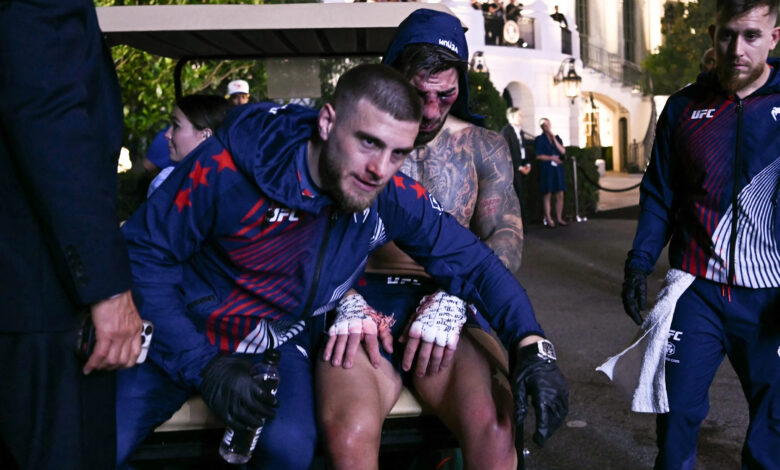
Fight sports hate quitters so much that even the faintest whiff of surrender brings contempt and condemnation. Witness the case of former two-division UFC champ Ilia Topuria, who, having been rendered essentially sightless in both eyes by the combination of blood and swelling and blunt-force trauma, merely consented to having his title defense against Justin Gaethje waved off after the fourth round at the UFC’s White House event earlier this month.
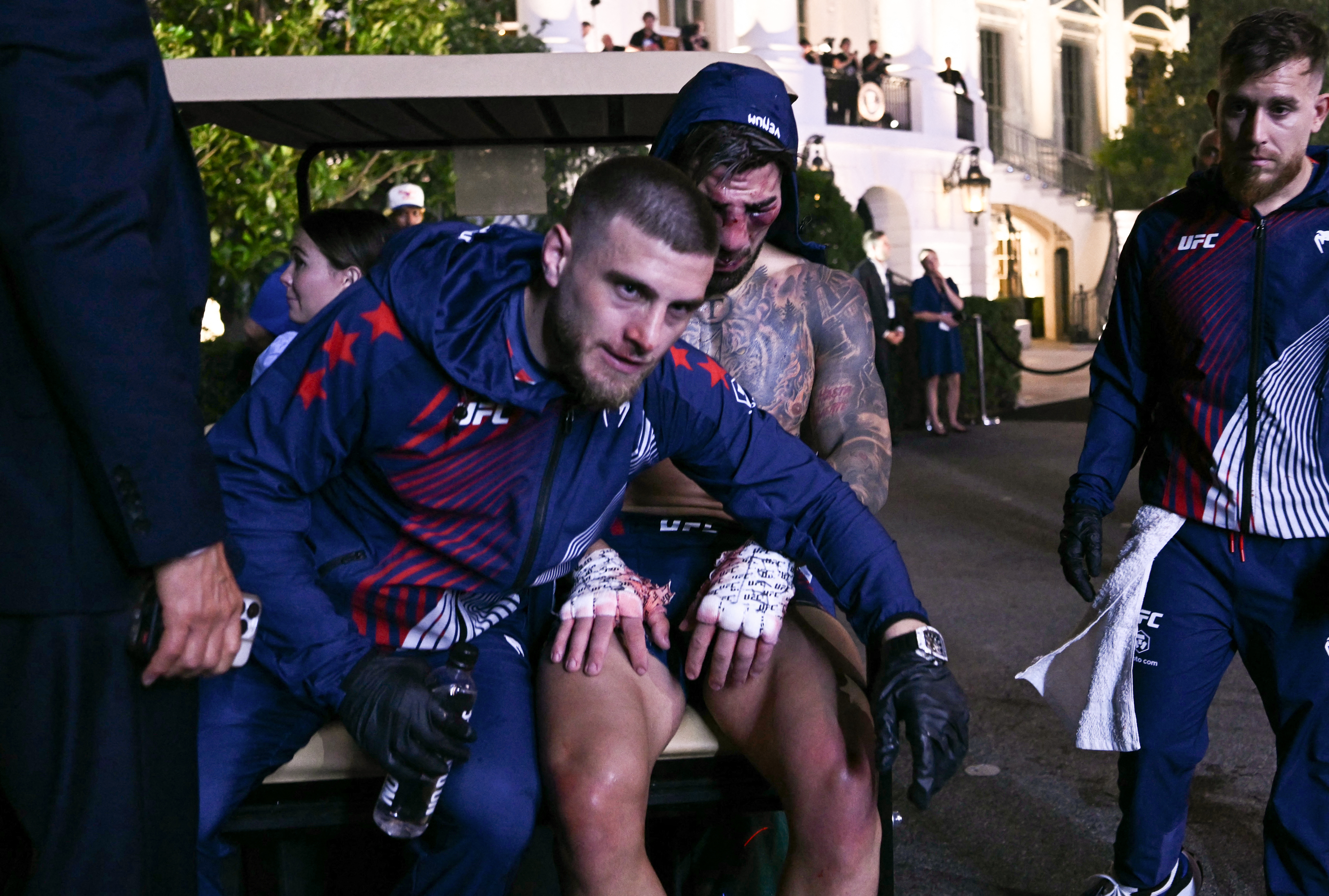
Mind you, Topuria didn’t quit in the middle of a round. He didn’t even (as far as we could tell on the broadcast) ask his coaches to stop the fight. But when his brother called it off between rounds, Topuria sat there and bloodied and blind and exhausted, offering no visible protest. And that was enough.
“He quit on the stool,” Gaethe later told Joe Rogan while explaining why he doesn’t plan to give Topuria an immediate rematch. “He quit twice. I stopped him twice. What else do I have to f***ing do?”
The UFC even auctioned off the stool from the red corner that night — the stool Topuria used — as a piece of memorabilia from that historic event. It took no time at all for fans to identify this as “the stool that Ilia Topuria quit on,” like they were bidding on the pen used to sign the documents of surrender.
There are many ways to quit in a fight. Most of them go largely unnoticed. A fighter eats a hard shot and then goes down and covers up, waiting for the referee to save him. Or maybe he dives in on a desperation takedown and leaves his neck intentionally exposed for a choke. It might not look like he’s waving the white flag, but he knows what he’s doing. The cause has become hopeless and, whether due to damage or fatigue or sheer discouragement, he staggers knowingly into the jaws of defeat.
It happens all the time, whether the average fan recognizes it or not. But these modes of capitulation are typically just sneaky enough to evade our ire. It’s the ones where we have a chance to see the surrender up close, a clear and vivid resignation, that bring a lasting rebuke.
For instance, remember a fighter named Max Rohskopf? He made his UFC debut on extremely short notice back in 2020, reportedly taking the fight about a week ahead of time as a late replacement. It was just his sixth professional MMA bout, and after two rounds against Austin Hubbard, he was spent. Rohskopf told his corner he was done. His coach, Robert Drysdale, tried to talk him out of it. But Rohskopf insisted and the fight was called. That was the end of his UFC career. One and done.
And the thing is, it’s not even like fans were really looking forward to that fight between Rohskopf and Hubbard. It was a prelim bout on a forgettable UFC Fight Night card at the Apex. Most fans didn’t know these fighters, and so couldn’t really claim that their expectations hadn’t been met.
But the fury and the contempt seem to spring from something more than mere disappointment. It’s as if some vital covenant has been broken. We show up expecting warriors ready to battle to the bloody end. If some fighter instead gives us what would, in other situations, be a reasonable calculation based on body physics and odds of victory, we feel the sacred contract has been violated.

It’s extreme, and at times it’s unfair. Topuria’s case is a great example of the latter. One round before his corner stopped the fight, a doctor recommended that referee Marc Goddard do the same — and for the same reasons. Topuria’s vision was compromised. The situation was getting hopeless and recklessly unsafe. If the referee had agreed to stop it then, Topuria probably doesn’t end up taking the same heat from fans. Maybe there’s no auction for the stool. Maybe there’s also a lot more fan outrage directed at doctors and officials for denying us a conclusive ending to a main event title fight.
Topuria could have played up the eye problems and brought about that result. Instead he wanted to continue. His corner gave him that one more round, then wisely called it off. Still, for many it was too close to quitting. Maybe it just looked the same from afar. We’re so allergic to that species of defeat, it’s like we insist on sniffing it out at the slightest hint.
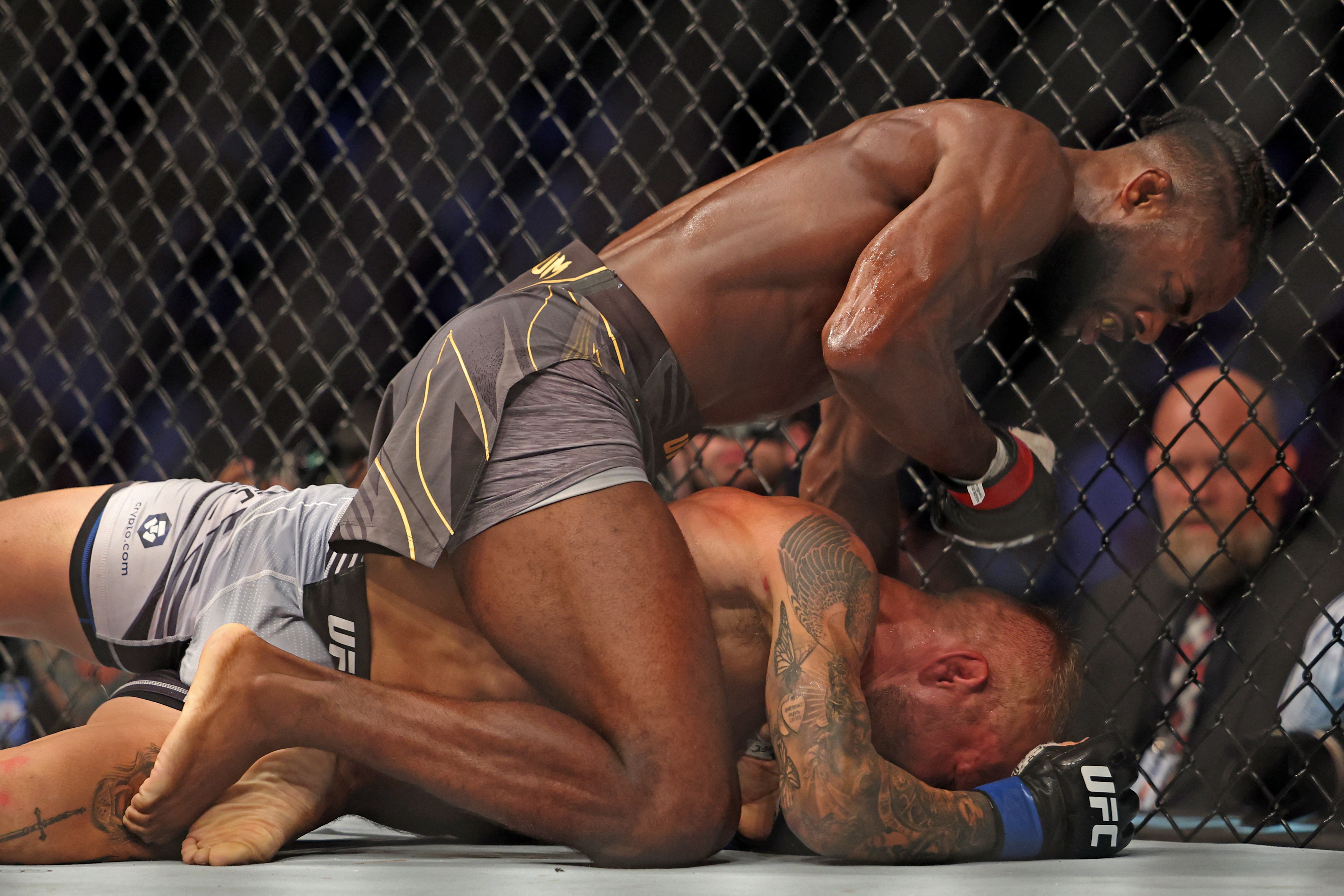
But that unspoken contract between fighters and fans is a tricky thing. Back in 2022, former UFC champ T.J. Dillashaw went into a bantamweight title fight against Aljamain Sterling with a shoulder he knew was a liability. While training for the fight, he’d dislocated it about 20 times, by his own estimation. Sure enough, it popped out again in the first round, and by the second frame all he could do was try to protect himself as Sterling took his back and pummeled him until the ref had seen enough.
Afterward, Dillashaw apologized. He knew he was probably toast with this injury, he said, and he also knew that he’d held up the division by staying in the fight and getting in the way of other, healthier fighters. But he needed to get paid and it was worth a shot, right? Somehow, he didn’t get blamed too harshly for quitting — or for violating that contract of expectations by showing up knowing (or at least mostly knowing) that he had no real shot to win with only one good arm.
Quitting doesn’t always look like quitting. And what may look like quitting isn’t necessarily the thing itself. But as fans we feel a certain right to pass judgment. We have paid for this with our money and attention and we insist on being paid back in blood. Anything less and we’ll never let a fighter forget it. Just ask Duran.
You wonder now what would have happened if he had a chance to end the round and talk it over with his coaches more. A fighter’s cornermen sometimes have an easier time maintaining the necessary perspective. They know what it will mean to give up, even if the fighter himself might be too discouraged by his own misery to recognize it just then.
Renowned boxing trainer and commentator Teddy Atlas was once asked what he would have told a fighter like Duran if he’d had a chance to talk to him before that “no sigo” moment against Leonard.
“I would have said, you better think about what this is going to mean tomorrow,” Atlas said. “This thing you have to deal with for a few more minutes is going to be gone just like a puddle in the summer, it’s going to be gone in the air. What’s not going to be gone is what you did here. If you quit, that’s going to be with you forever. You better think about it before you put yourself in a position that you’re going to have to live with for the rest of your life.”
And for something like that, the rest of your life can be a long, long time.