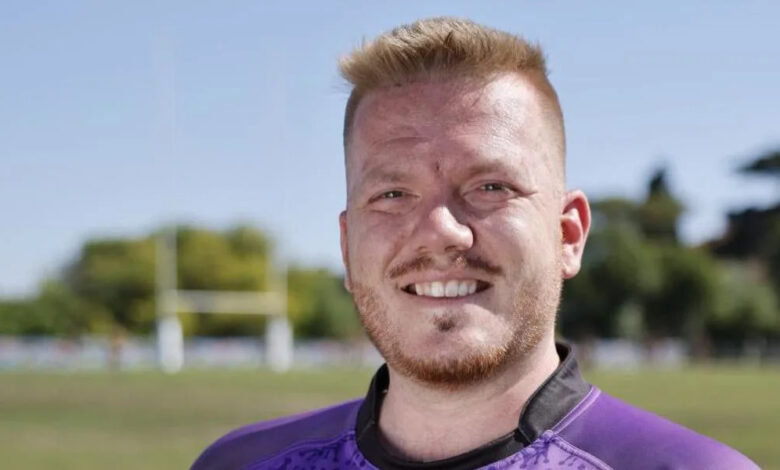

When Sam Biscoe started a rugby team for players from the LGBTQ+ community in 2022, he braced himself for a modest turnout.
Instead, about 30 people turned up for day one of training at Colchester Rugby Club in Essex, and the Colchester Kings became the first inclusive club in the East of England.
Four years later, about 120 people are now associated with the club, including players, coaches and regular supporters, and it is a member of International Gay Rugby (IGR).
The Colchester Kings are now not alone in embracing inclusive rugby, with new teams forming in Essex and Norfolk, and on Saturday, the region’s latest side is meeting for the first time in Cambridge.
So what is inclusive rugby, and how do LGBTQ+ players feel about finding their spot on the pitch in the East?
What is inclusive rugby?

According to IGR, its teams “provide opportunities for members of the LGBTQ+ community to enjoy competitive rugby whilst improving respect and tolerance for people of all gender identities and sexualities worldwide”.
Ross Barr-Hoyland, a trustee of the organisation which was set up in 2000, says there are now about 150 inclusive clubs registered with IGR.
The 37-year-old says it is important LGBTQ+ people are visible in sport, especially as there are currently no openly gay players in the top flight of English rugby union.
“For now, we have to serve as those role models,” he says. “I think that’s what’s beautiful about IGR clubs in general.”
Barr-Hoyland says many allies of the LGBTQ+ community also choose to join IGR teams because they prefer the culture compared to traditional rugby clubs.
The IGR says it has clubs across the UK and on six continents, but until 2022, there were no inclusive rugby teams in the East of England.
That was until Biscoe, who previously played for the inclusive club Northampton Outlaws, moved to Colchester and found no club to join in the Essex city, so he started the journey of setting up his own.
“On that first day, I was just very worried that maybe it would just be four of us handing a ball around to each other,” the 39-year-old says.
“But on our very first training session, we had 30 people that turned up and it’s just grown and grown from there.”
He says many players travel far to join the Kings, with other teams springing up across the region.
“The more there is in the region then the better it is for all the teams,” says Biscoe.
“There will be less travelling; we won’t have to go halfway across the country to get a match in.
“If people find their place with those teams, then we’re really happy about that. And to be able to have played a part of their history really means a lot to us,” he says.

Iceni RFC launched in Wymondham, Norfolk, a few months after the Kings, and similar teams have since launched elsewhere in Essex and are currently in the process of joining IGR officially.
Stuart Kimber, the captain of the Rochford Hundred Hawks, has played Rugby since he was in school and has previously been a member of traditional rugby clubs without any issues, but says he understands why some players may feel intimidated by them.
“We’re constantly getting new people asking to join or if they can just come along and watch or how they can support the team without necessarily playing,” the 32-year-old says.
The Hawks currently have 17 players and about 20 people have joined the nearby Southend Sea Lions.
Team manager Matt Driffill, 46, says the Sea Lions have attracted players ranging from 18 years old to men in their 50s.
“It’s like a family,” he adds. “People make really good friends when they come down and they start playing rugby.”

The Northampton Outlaws, Biscoe’s former inclusive rugby team, launched in 2012 and now has about 90 players, according to club president Simon Law.
Law says there were well-known teams in big cities such as London, Manchester, and Birmingham when the Outlaws were formed, and since then he has enjoyed seeing clubs launch in smaller towns and cities.
He thinks inclusive rugby has grown in popularity “because it’s very intimidating as a gay man to walk into a non-inclusive rugby club where most people already know each other”.
“When you look to set up an inclusive club, the whole ethos is that you’re looking to get people in that may never have played rugby before,” the 46-year-old says.
Since joining the team, Law has qualified as a referee and coach and enjoys welcoming new players every season.
In Cambridge, founding members of the region’s newest team have been promoting the club at the city’s Pride festival and say they expect about 30 people to turn up to the Yales’ first session on Saturday at the Cambridge Rugby Club.
Do you have a story suggestion? Contact us below.
Follow East of England news on X, Instagram and Facebook: BBC Beds, Herts & Bucks, BBC Cambridgeshire, BBC Essex, BBC Norfolk, BBC Northamptonshire or BBC Suffolk.
More on this story
- City’s first gay rugby team prepare for kick-off
- The LGBTQ+ rugby club breaking down barriers
- LGBTQ+ rugby club wins ‘life-changing’ trophy